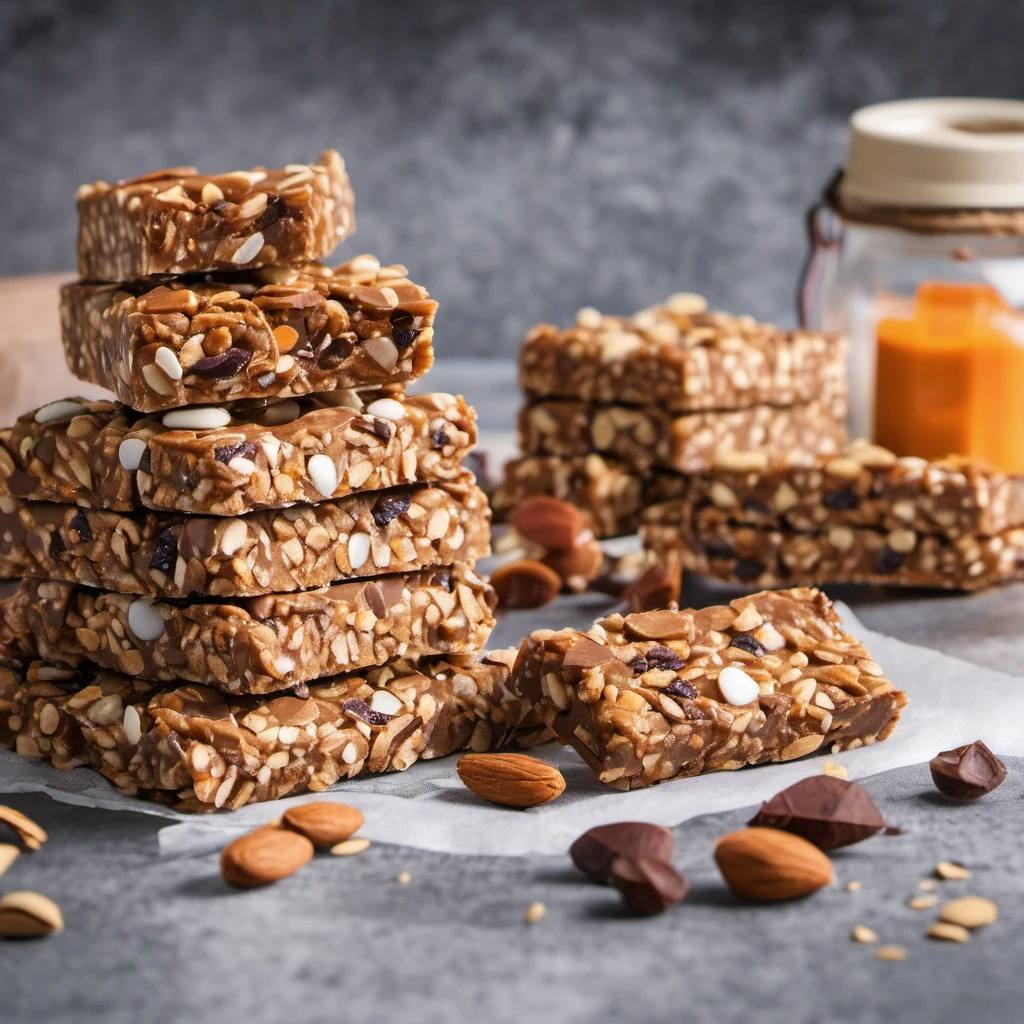
Emergency food bars can add compact, ready-to-eat calories to a go-bag, vehicle kit, workplace supply, or home emergency pantry. But products sold as “bars” fall into two very different groups: purpose-built emergency ration blocks designed for long storage, and ordinary energy or protein bars that must be rotated much more frequently.
The best choice depends on where the food will be stored, how soon you expect to use it, dietary restrictions, and whether you need a calorie-dense emergency ration or simply a familiar snack. This guide compares 20 useful options while making that distinction clear.
Quick answer: For a sealed long-storage kit, begin with a purpose-built ration from a recognized manufacturer such as Datrex, S.O.S., Mayday, Mainstay, or Millennium, and verify the printed expiration date when it arrives. For a household pantry or hiking kit that you inspect regularly, familiar grocery-store bars can provide better flavor and more dietary variety—but they are rotation foods, not five-year survival rations.
Emergency Ration Bars vs. Everyday Energy Bars
Dense, portioned food blocks packaged for emergency storage. Many are marketed with a five-year shelf life and may be manufactured to maritime survival-ration standards. They prioritize storage stability and calories over menu variety.
Energy, meal, fruit, nut, oat, or protein bars intended for normal retail use. They may taste more familiar and offer more dietary choices, but their shelf life and heat tolerance vary. Buy them as foods you will regularly eat and replace.
Neither category is automatically “better.” A five-year ration block makes sense in a rarely opened emergency kit. A rotation bar may be better for children, picky eaters, hikers, or anyone who wants food they already know they tolerate. A strong plan can include both.
The 20 Best Emergency Food Bars at a Glance
| Product | Category | Best use | Important limitation |
|---|---|---|---|
| Datrex 3600 | Emergency ration | Long-storage kits and marine-style supplies | Dense, limited flavor variety |
| S.O.S. 3600 | Emergency ration | 72-hour calorie reserve | Check the delivered manufacture/expiration date |
| Mayday 3600 | Emergency ration | Home, workplace, and vehicle preparedness | Not a balanced long-term diet |
| Mainstay 3600 | Emergency ration | Portioned emergency calories | Availability can vary by seller |
| Millennium Energy Bar | Emergency ration | Individual kits and flavor variety | Usually less economical per calorie |
| CLIF BAR | Rotation bar | Active-use kits and hiking | Shorter shelf life than emergency rations |
| PROBAR MEAL | Rotation bar | Higher-calorie pantry rotation | Large bar; formulas and allergens vary |
| RXBAR | Rotation bar | Protein-focused rotation | Chewy texture and common allergens |
| LÄRABAR | Rotation bar | Simple-ingredient fruit-and-nut option | Nuts in many varieties |
| KIND Nut Bar | Rotation bar | Familiar snack rotation | Nut allergens and heat-sensitive coatings |
| GoMacro MacroBar | Rotation bar | Plant-based rotation | Must be rotated by the printed date |
| Bobo's Oat Bar | Rotation bar | Oat-based calorie option | Can be bulky and crumbly |
| Kate's Real Food Bar | Rotation bar | Outdoor and pantry use | Not designed for multiyear storage |
| Thunderbird Bar | Rotation bar | Fruit-and-nut dietary variety | Check current ingredients and allergens |
| EPIC Meat Bar | Rotation bar | Savory protein variety | Shorter rotation and poor hot-car choice |
| MET-Rx Big 100 | Rotation bar | Calorie-dense meal-bar rotation | Coatings can melt; allergens vary |
| Quest Protein Bar | Rotation bar | Protein-focused dietary planning | Not intended as complete emergency nutrition |
| Nature Valley Crunchy | Rotation bar | Budget-friendly familiar snack | Crumbly and relatively low per-bar calories |
| Honey Stinger Waffle or Bar | Rotation bar | Quick energy during activity | Not a meal replacement or long-storage ration |
| That's it Fruit Bar | Rotation bar | Fruit-based ingredient variety | Low protein and modest calories |
Best Purpose-Built Emergency Food Rations
These products are the closest match for someone searching specifically for a “survival food bar.” Package sizes, formulations, certifications, and expiration dates can change. Confirm the current label and seller-provided dating before purchase.
Datrex 3600-Calorie Emergency Food Ration
Datrex packages concentrated food portions inside a larger sealed ration pack. It is a practical choice when storage life, compact size, and portioning matter more than dietary variety. Datrex identifies its 3600-kcal ration as a U.S.-manufactured emergency product.
Best for: Go-bags, boats, workplace kits, and compact household reserves.
S.O.S. 3600-Calorie Emergency Food Ration
The S.O.S. ration is divided into measured portions within a sealed package and is commonly sold as a 72-hour calorie reserve. Current listings describe the product as U.S. Coast Guard approved with a five-year shelf life from manufacture.
Best for: A straightforward three-day calorie reserve where cooking is unavailable.
Mayday 3600-Calorie Emergency Food Ration
Mayday is another compact ration-block option sold for emergency kits. It requires no cooking and can be divided across several eating periods. As with every long-storage ration, the value depends on receiving fresh stock with useful remaining shelf life.
Best for: Bulk family, office, school, or vehicle-kit planning.
Mainstay 3600-Calorie Emergency Food Ration
Mainstay's large ration is traditionally divided into nine 400-calorie portions. It is a recognizable alternative to Datrex and S.O.S., although retail availability may fluctuate. Verify that the seller is shipping current inventory rather than aging clearance stock.
Best for: Shoppers who prefer clearly marked ration portions.
Millennium Energy Bars
Millennium bars use individually wrapped portions rather than requiring you to open one large ration pack. The separate flavors and packages can make distribution easier and reduce the problem of exposing the rest of a ration after one portion is eaten.
Best for: Small personal kits, individual distribution, and households wanting more flavor choice.
Best Everyday Bars for Emergency-Kit Rotation
The following products can be useful in actively managed kits, but they should not be treated as equivalent to sealed emergency rations. Store them in a cool, dry place, inspect the wrappers, and replace them by the printed best-by date or sooner if heat, damage, odor, texture, or taste suggests deterioration.
CLIF BAR Energy Bar
A familiar, widely available energy bar that works well in hiking supplies and frequently checked emergency kits. Flavors and formulas vary, so compare current labels for protein, added sugar, allergens, and caffeine.
Best for: Active households that already eat and rotate CLIF bars.
PROBAR MEAL Bar
PROBAR's larger meal-style bars provide more substantial portions than many snack bars. They are useful when you want a compact pantry-rotation food rather than a small snack, but current recipes and allergen statements should be checked individually.
Best for: Higher-calorie rotation in home, work, or travel supplies.
RXBAR
RXBARs combine egg whites, dates, nuts, and other flavor-specific ingredients in many varieties. They add protein and a different texture to a kit, but common allergens and the dense chew make them unsuitable for some users.
Best for: Adults who already tolerate and enjoy the product.
LÄRABAR
Many LÄRABAR varieties use short ingredient lists built around dates, fruit, and nuts. That simplicity can be appealing, but “simple” does not mean allergen-free, and the calorie and protein totals vary by flavor.
Best for: Fruit-and-nut rotation with easily recognized ingredients.
KIND Nut Bars
KIND bars provide a recognizable nut-based snack in many flavor profiles. They can improve variety in a home kit, but chocolate or other coatings may soften in heat, and nut allergens make them inappropriate for some households and shared facilities.
Best for: Cool indoor storage and routine pantry rotation.
GoMacro MacroBar
MacroBars offer plant-based options in multiple flavors and sizes. They can provide dietary variety when selected carefully, but shoppers should verify each flavor's current certification, ingredients, calorie count, and allergen statement.
Best for: Plant-based households with an active rotation system.
Bobo's Oat Bars
Oat bars can be satisfying and familiar, especially for users who dislike dense protein bars. Bobo's products come in several formats, so package size and nutrition vary. Their bulk and tendency to crumble are worth considering in small kits.
Best for: Home and workplace supplies where space is not extremely limited.
Kate's Real Food Bars
These bars are marketed for everyday and outdoor energy and can add familiar ingredients and flavor variety to a frequently used kit. They are conventional energy bars, not maritime survival rations, so rotate them according to package dating.
Best for: Hiking, camping, road trips, and pantry rotation.
Thunderbird Bars
Thunderbird's fruit-and-nut style products can broaden flavor and ingredient choices. Product lines change, so confirm that the selected variety meets your dietary needs rather than assuming every flavor shares the same attributes.
Best for: Dietary variety in cool, regularly inspected storage.
EPIC Meat Bars
A savory meat bar breaks up the sweetness of many emergency snacks and adds a different protein source. It is not a substitute for a five-year ration and is generally a poor choice for neglected hot-car storage. Observe the printed date and package condition.
Best for: Shorter-term rotation by people who prefer savory food.
MET-Rx Big 100 Bar
The larger format can supply more calories than a small snack bar, making it useful for a managed travel or work kit. Formulas, coatings, and allergens vary, and heat can affect taste and texture.
Best for: Meal-bar rotation where compact calories are the priority.
Quest Protein Bar
Quest bars may fit households prioritizing protein or limiting certain carbohydrates, but they are not complete emergency meals. Some users also find high-fiber or sugar-alcohol formulations difficult to tolerate, so test the exact flavor before stocking it.
Best for: Personal kits built around known dietary preferences.
Nature Valley Crunchy Granola Bars
These widely available bars are inexpensive, familiar, and individually packaged. They are useful for ordinary pantry rotation, though they are crumbly and usually provide fewer calories per individual bar than a purpose-built ration portion.
Best for: Budget-conscious household rotation and group snack supplies.
Honey Stinger Waffles or Bars
Designed for energy during activity, these products can be useful during an evacuation on foot or outdoor travel. They should be paired with more substantial food because quick-energy snacks are not complete meals.
Best for: Hiking, cycling, evacuation bags, and active-use kits.
That's it Fruit Bars
Fruit bars can add a different taste and ingredient profile to a kit dominated by grain, nut, or protein products. Their modest calorie and protein content means they work best as one component of a varied supply rather than its foundation.
Best for: Flavor variety and short-term snack rotation.
How to Choose an Emergency Food Bar
- Start with the storage location. A climate-controlled pantry is very different from a vehicle exposed to summer heat.
- Read the total calories carefully. Distinguish calories per serving from calories in the entire multiportion package.
- Check the actual expiration date. Do not assume that every unit arrives with its full advertised shelf life remaining.
- Review allergens by flavor. Nuts, milk, egg, soy, wheat, and other allergens are common in both ration and retail bars.
- Choose food people will eat. Test one before purchasing a case, especially for children, older adults, and people with texture sensitivities.
- Avoid depending on one product. Bars supply convenient calories, but a varied emergency food plan is easier to tolerate and nutritionally broader.
- Inspect packaging. Replace bars with torn, swollen, punctured, leaking, or otherwise compromised wrappers.
- Store water separately. Compact food never removes the need for an adequate drinking-water plan.
Do Not Use One Universal Sugar or Protein Rule
The original version of this article gave rigid sugar, fat, and protein targets that could mislead readers. An emergency ration, sports-energy product, snack bar, and meal-style bar serve different purposes. Instead of applying one number to every product, compare the full Nutrition Facts panel, serving size, calories, protein, fiber, added sugar, saturated fat, sodium, ingredients, and allergens in the context of your health needs.
People managing diabetes, kidney disease, food allergies, swallowing difficulties, or other medical conditions should build their emergency food supply around guidance from an appropriate healthcare professional. Do not wait for a disaster to discover that a chosen product is unsuitable.
Where Emergency Food Bars Fit in a Larger Supply
Bars are most useful when space is limited or eating must be immediate: during evacuation, in a workplace desk, inside a day pack, or as the first layer of a vehicle kit. They are less satisfying as the only food for several days. A home supply should also include foods with different textures, flavors, protein sources, and preparation requirements.
Use our Emergency Food Guide to build the broader plan, then calculate a realistic household quantity with How Much Emergency Food Should I Store?. The Preparedness Resource Center connects those food plans with water, power, navigation, and other preparedness topics.
Emergency Food Bars vs. MREs
Bars prioritize compactness. Purpose-built ration blocks store a large number of calories in a small space, while rotation bars offer flavor and dietary variety. Neither normally provides the experience or component variety of a complete meal.
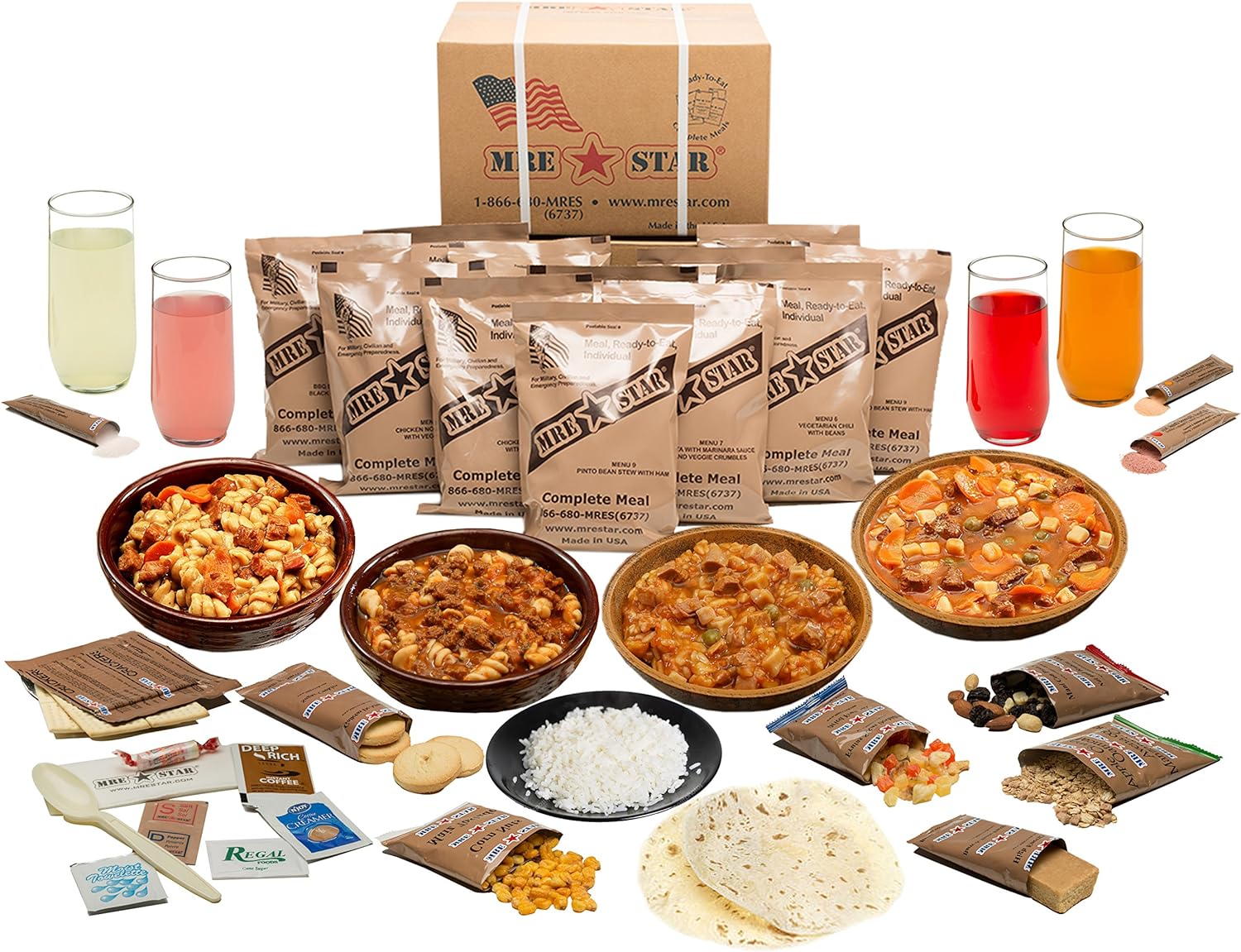
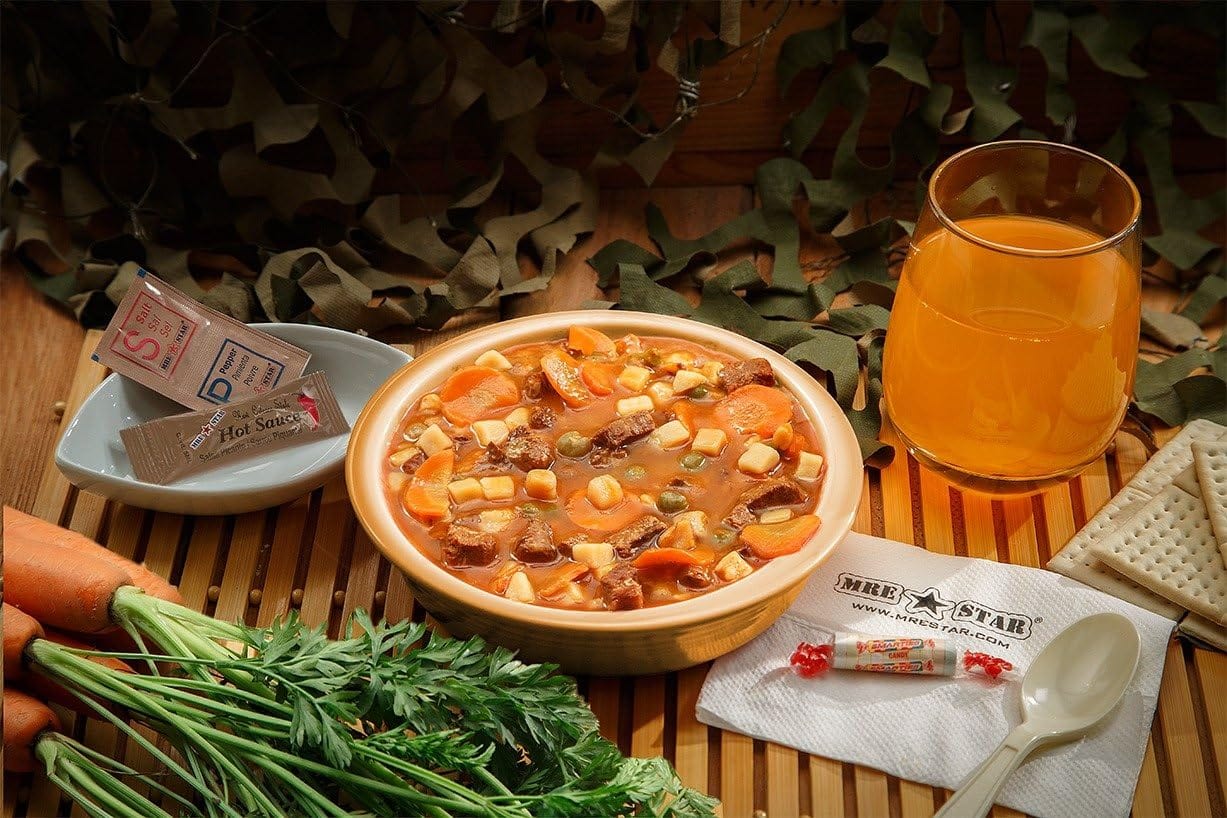
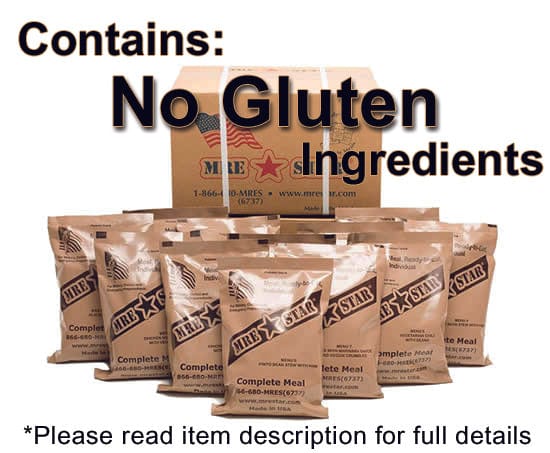
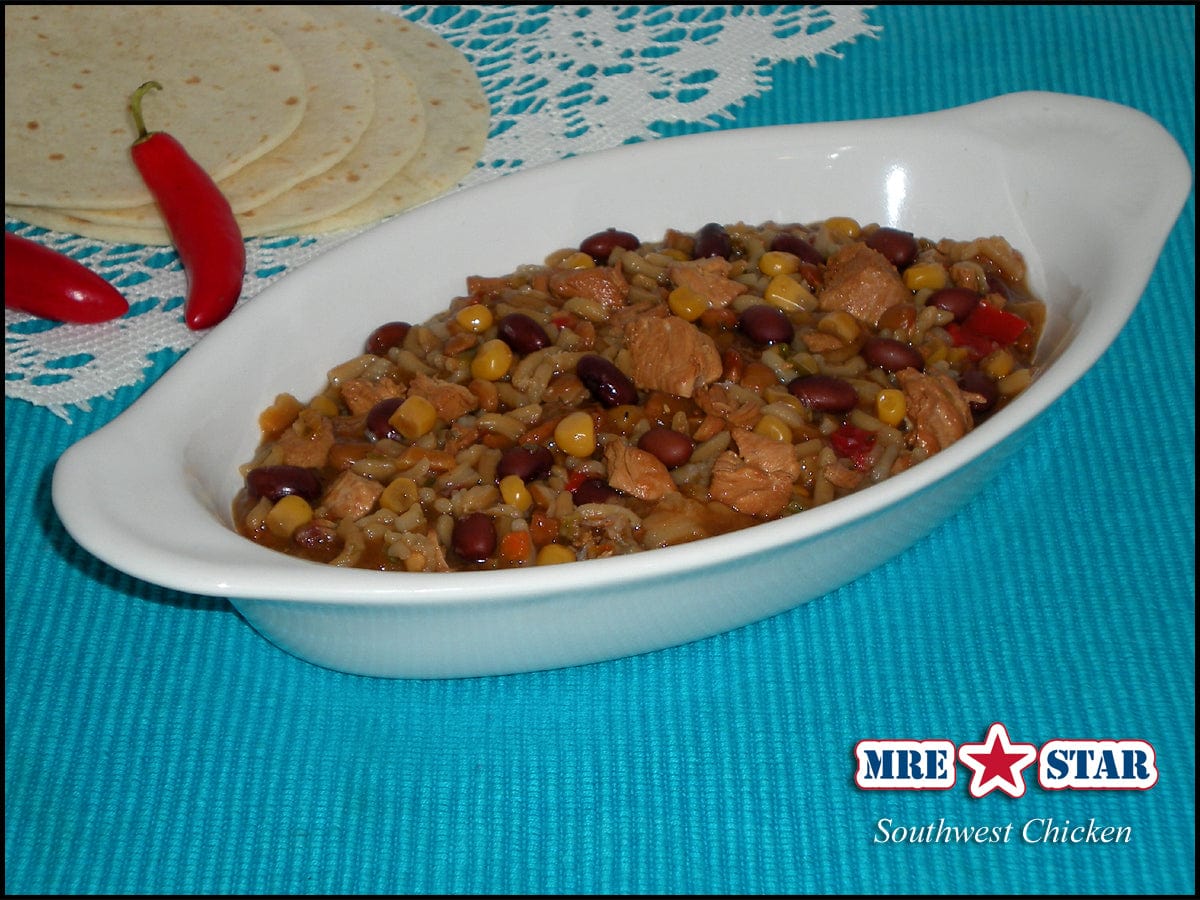
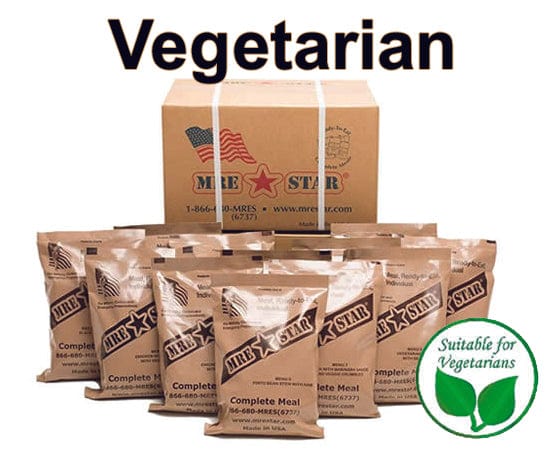
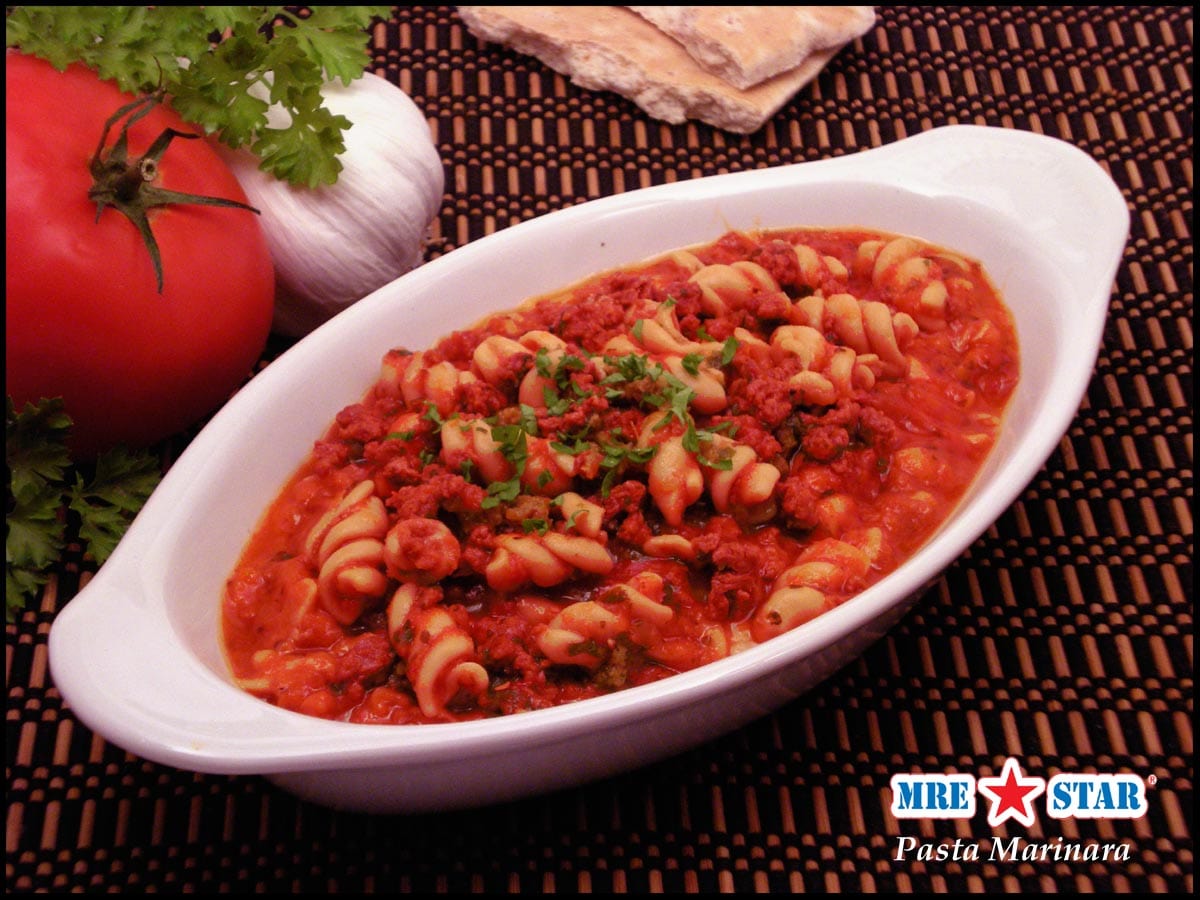
MREs prioritize complete, ready-to-eat meals. The MRE STAR M-018H contains 12 complete meals with flameless ration heaters. The entrées are fully cooked and can be eaten hot or cold without refrigeration before opening. Vegetarian households can consider MRE STAR Vegetarian meals, while shoppers avoiding gluten ingredients should first review the cross-contact warning on MRE STAR No Gluten meals.
For differences in contents, calories, storage, heaters, and civilian versus military rations, read the Complete Guide to MREs.
A practical household supply can use all three layers: a long-storage ration for a sealed kit, familiar bars for regular rotation, and complete meals for situations in which normal cooking is unavailable.
How to Store and Rotate Food Bars
- Record the date. Write the best-by or expiration date where it is easy to see without opening the kit.
- Use first in, first out. Eat the oldest rotation bars during normal life and replace them with newer stock.
- Control heat and moisture. A cool, dry indoor cabinet is generally better than an attic, garage, shed, or vehicle.
- Inspect twice a year. Check seals, odor, appearance, pests, and package damage, and recharge or replace other kit supplies at the same time.
- Keep dietary records current. Household allergies, medications, dental needs, and food preferences can change before the food expires.
- Follow the manufacturer. Printed storage directions and expiration dating take priority over general online advice.
Frequently Asked Questions
What is the best emergency food bar?
For long, low-maintenance storage, choose a fresh purpose-built emergency ration with intact packaging and clearly printed dating. Datrex, S.O.S., Mayday, Mainstay, and Millennium are established names in this category. For regularly inspected kits, the best bar is usually one your household already eats, tolerates, and rotates.
How long do emergency food bars last?
Many purpose-built emergency rations are marketed with a shelf life of up to five years from manufacture when stored as directed. Conventional energy and protein bars generally have much shorter dating. Always rely on the exact package and manufacturer instructions rather than the category name.
Can emergency food bars be stored in a car?
Some purpose-built rations are designed for wider storage conditions than grocery-store bars, but extreme vehicle temperatures can still affect food quality and packaging. Inspect vehicle supplies more often, follow manufacturer temperature guidance, and rotate ordinary bars frequently.
How many emergency bars should I store per person?
Calculate by calories per serving, the number of people, the planned duration, and the rest of the food supply. Do not count packages without checking how many servings each contains. Individual calorie needs vary, and bars should normally be only one part of the plan.
Are emergency ration bars complete meals?
No. They are concentrated emergency calories divided into portions. They can be valuable when cooking is impossible, but they do not provide the variety of a complete meal or a balanced long-term diet.
Are protein bars good survival food?
Protein bars can be useful rotation foods, particularly if you already eat them. They are not automatically suitable for multiyear storage, high heat, or every dietary need. Check calories, ingredients, allergens, package dating, and storage instructions.
Do emergency food bars require water?
They generally require no water for preparation, but you still need drinking water. Dense, dry, sweet, or salty foods may be difficult to eat comfortably without it, and food never replaces hydration planning.
Build a Layered Emergency Food Plan
Emergency food bars are useful because they are compact, portable, and ready to eat. Their limitations are just as important: ration blocks offer little variety, while ordinary snack bars require frequent rotation and may perform poorly in heat.
Choose the product by its real role. Put a properly dated emergency ration in a low-maintenance kit, rotate familiar bars through the pantry and active bags, and add complete foods or MREs for longer disruptions. That layered approach is more practical than expecting one bar to meet every emergency need.
Editorial note: Product formulations, packaging, availability, certifications, and expiration dating can change. Verify current manufacturer information and the label on the exact product you receive. For general U.S. emergency-kit guidance, consult Ready.gov. Product-category details were checked against current Datrex and S.O.S. listings.