How much does a bunker cost? A small underground storm shelter may cost only several thousand dollars, but it is not the same as a fallout shelter. For a purpose-built residential fallout bunker, a realistic starting budget is often around $40,000 to $120,000 for the prefabricated unit, before delivery and site work. A professionally engineered and installed family shelter can easily reach $75,000 to $250,000 or more. Large custom bunkers can cost hundreds of thousands or several million dollars.
The advertised shelter price is only one part of the project. Excavation, soil conditions, groundwater control, engineering, permits, crane access, delivery, utility connections, drainage, backup power, ventilation, interior work, and long-term maintenance can materially change the final total.
Important: No underground shelter can guarantee survival from every nuclear detonation, blast distance, flood, fire, earthquake, or structural failure. “Fallout protection” and “blast resistance” are different engineering goals. Any buried occupied structure should be designed for its site and intended hazards by qualified professionals and approved under applicable local codes.
Underground Bunker Cost Ranges
Bunker prices vary so widely because the term can describe anything from a compact storm cellar to a fully engineered underground residence. The following figures are planning ranges—not contractor quotes—and should be adjusted for location, site access, soil, water table, structure type, occupancy, and protection goals.
Designed primarily for severe wind and debris. It should not be described as a nuclear blast or fallout bunker unless it has separately documented capabilities.
A manufactured steel or concrete unit. Delivery, excavation, crane work, utilities, permits, and site restoration may be additional.
A broader project budget for a finished residential shelter with professional installation, ventilation, power, water, sanitation, and interior systems.
Multiple rooms, extended occupancy, redundant utilities, specialized hardening, premium finishes, and difficult sites quickly increase cost.
As a current market reference, HomeAdvisor reports an average of roughly $60,000 for a 200-square-foot bunker and places prefabricated nuclear shelter units around $40,000 to $120,000 before labor and shipping. One manufacturer's May 2025 price sheet lists configured shelters from approximately $60,000 to $475,000, but its current pricing page says prices are being updated and directs buyers to request a quote.
These examples show why an old online price table should not be treated as a final installed cost. Ask for a written scope that separates the shelter, options, freight, crane, excavation, foundation or bedding, backfill, waterproofing, drainage, utilities, permits, engineering, commissioning, and warranty.
Fallout Shelter, Bomb Shelter, Bunker, or Storm Shelter?
Before comparing prices, define the hazard. A lower-cost structure may be excellent for one purpose and inappropriate for another.
| Shelter type | Primary purpose | What it does not automatically provide |
|---|---|---|
| Storm shelter or safe room | Protection from extreme wind and windborne debris when designed to the applicable standard. | Radiation shielding, filtered positive-pressure air, or blast resistance. |
| Fallout shelter | Uses distance and shielding mass to reduce exposure to radioactive fallout after a nuclear event. | Survival from a nearby fireball, ground shock, extreme overpressure, or structural collapse. |
| Blast-resistant shelter | Engineered for a defined pressure, impulse, debris load, and site scenario. | Protection from every weapon size or distance. The design basis must be stated. |
| CBRN/NBC shelter | Adds controlled ventilation and filtration intended for chemical, biological, radiological, or nuclear hazards. | Structural blast protection unless the enclosure is separately engineered for it. |
| Long-duration bunker | Provides living space and redundant water, waste, power, air, food, and maintenance systems. | Unlimited self-sufficiency. Consumables, equipment, occupants, and maintenance still impose limits. |
FEMA safe-room publications focus on tornado and hurricane hazards. Meeting a wind-shelter standard should not be presented as proof of nuclear blast performance. Likewise, a manufacturer's “NBC filter” does not by itself establish the structural strength, radiation protection factor, habitability, or whole-system performance of a bunker.
What Determines the Final Bunker Cost?
1. Size and Occupancy
Square footage matters, but so do the number of occupants and planned shelter time. A four-person space for 24 to 72 hours has different air, water, sanitation, sleeping, storage, and power requirements from a shelter intended for several weeks.
2. Site, Soil, and Groundwater
Rock excavation, unstable soil, a high water table, poor drainage, steep slopes, flood exposure, limited equipment access, and contaminated soil can dramatically change the project. A geotechnical evaluation may be one of the most valuable early expenses because underground structures must resist soil pressure, water pressure, settlement, uplift, and corrosion for decades.
3. Delivery, Crane Access, and Excavation
A factory price may not include transportation or placement. Oversize-load permits, escort vehicles, long-distance freight, crane capacity, utility-line clearance, road width, gate access, and the distance from the unloading area to the excavation all affect cost.
4. Structure and Protection Level
Materials alone do not establish performance. Steel thickness, reinforcement, geometry, welds, connections, doors, penetrations, entrance layout, soil cover, structural calculations, corrosion protection, and surrounding concrete or drainage systems must work together. Ask what loads and hazards the design is actually engineered to resist.
5. Ventilation and Filtration
Ventilation is a life-safety system, not an accessory. The design should address normal air exchange, filtered mode, power loss, manual backup, intake and exhaust placement, condensation, carbon dioxide, carbon monoxide sources, pressure control, replaceable filters, and maintenance access.
6. Water, Waste, and Plumbing
Stored water is simpler than assuming an underground well will always operate. Plan separately for drinking, food preparation, hygiene, medical use, and sanitation. Waste storage or septic connections require realistic capacity, venting, backflow protection, freeze protection where relevant, and a maintenance plan.
7. Electrical and Backup Power
Lighting, communications, pumps, fans, controls, refrigeration, and medical devices all add electrical load. A generator also adds fuel storage, exhaust, heat, noise, and carbon-monoxide risks. Batteries and solar can reduce generator runtime, but they need load calculations, safe installation, and a replacement plan.
8. Interior Finish and Amenities
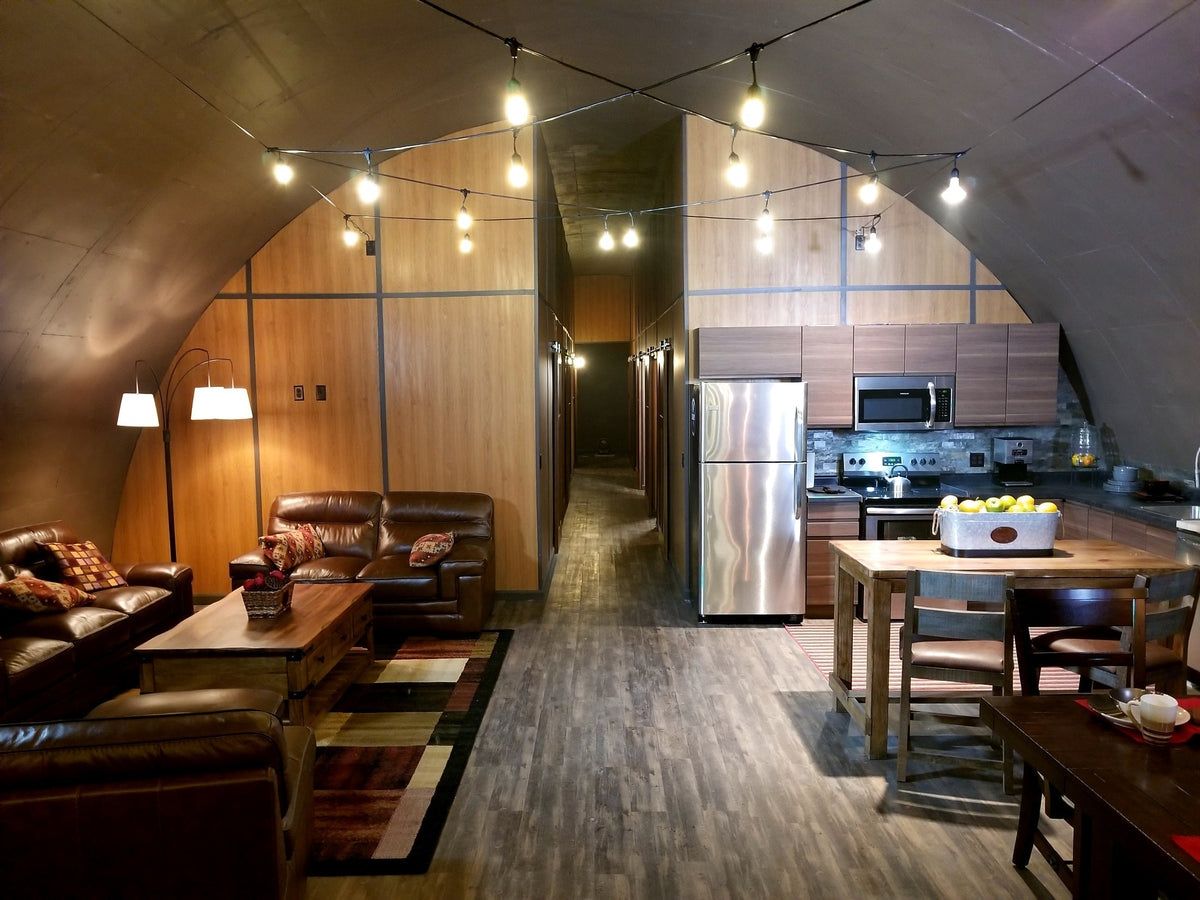
Bunks and basic storage cost far less than a full kitchen, bathroom, private rooms, office, gym, or theater. In a protective structure, systems access and cleanable, moisture-resistant materials are generally more important than luxury finishes.
9. Professional Fees, Permits, and Inspections
Most bunker projects require some combination of zoning approval, grading or excavation permits, structural review, electrical and plumbing permits, septic approval, and inspections. Requirements vary by jurisdiction. Engineering, surveying, architectural work, soil testing, and permit fees should appear in the budget before a shelter is ordered.
10. Contingency and Maintenance
Underground work frequently reveals conditions that drawings could not fully predict. A meaningful contingency is prudent. After installation, budget for filter replacement, pumps, batteries, seals, corrosion inspection, water rotation, generator service, pest control, leak checks, and periodic occupancy drills.
Critical Safety and Design Requirements
Use licensed professionals familiar with buried structures, local soil, hydrostatic pressure, structural loads, and applicable codes.
A primary entrance can be blocked by debris, fire, structural movement, or equipment. A separated emergency exit can be critical.
Exterior membranes, drainage layers, sumps or gravity drainage, penetrations, and backfill details must be designed as a system.
A buried structure can flood or experience uplift. Avoid assuming that underground automatically means safer in every location.
Consider carbon dioxide, carbon monoxide, humidity, temperature, smoke, and radon—not only filter branding.
Keep combustion, fuel, batteries, and generators properly separated and ventilated. Underground fire and smoke can be difficult to escape.
Fans, valves, filters, pumps, breakers, and manual overrides should remain serviceable without dismantling living areas.
Test systems under normal and backup power, verify air paths and alarms, practice entry and exit, and document maintenance intervals.
Avoid burying an ordinary shipping container. Containers are primarily designed to carry loads through their corners, not to resist continuous lateral soil and groundwater pressure on the walls and roof. A buried container requires site-specific structural engineering and corrosion, drainage, access, and life-safety design.
Underground Bomb Shelters for Sale: How to Compare Companies
The earlier version of this article ranked several companies and repeated their promotional language as fact. A safer approach is to treat manufacturers as quote sources and compare their documentation, engineering responsibility, exclusions, warranties, installation process, and references.
| Provider type or example | Typical offering | Questions to ask |
|---|---|---|
| Atlas Survival Shelters | Manufactured shelters in multiple sizes and finish levels. Its published May 2025 sheet showed prices from roughly $60,000 to $475,000; the current page requests updated quotes. | Which delivery, excavation, crane, installation, utilities, backfill, drainage, and permits are excluded? What drawings and calculations are provided for local review? |
| Rising S Company | Steel shelters ranging from compact models to extensive custom layouts. | Request a current model-specific quote, structural basis, installation scope, corrosion system, filtration specifications, warranty terms, and local engineering responsibilities. |
| Norad Shelter Systems | Custom shelter and filtration projects marketed for multiple hazards. | Ask for the precise design criteria, occupancy assumptions, protection claims, third-party engineering, commissioning procedure, replacement components, and total installed scope. |
| Hardened-structure contractor | Site-built or highly customized concrete and steel facilities designed around a particular property and risk model. | Confirm the project team, code path, professional liability, geotechnical work, construction quality control, inspection plan, schedule, and lifecycle maintenance. |
| Shared shelter community | Membership, co-ownership, lease, or access to a communal facility rather than a bunker on your property. | Review ownership, access rights, operating rules, ongoing fees, capacity, supplies, travel time, default risk, governance, insurance, and what happens if the operator fails. |
Documents to Request Before Paying a Deposit
- A detailed proposal showing inclusions, exclusions, allowances, change-order rules, taxes, freight, installation, and payment schedule.
- Dimensioned plans, equipment schedule, occupancy assumptions, and site requirements.
- Structural calculations or a clear process for obtaining locally stamped engineering.
- Specific performance criteria instead of phrases such as “military grade,” “all hazard,” or “EMP proof.”
- Ventilation flow rates, filtration specifications, manual backup, power demand, and replacement-filter availability.
- Water, sanitation, drainage, waterproofing, corrosion, fire-safety, and emergency-egress details.
- Warranty terms that distinguish the manufactured unit from excavation, installation, waterproofing, and third-party systems.
- References for completed projects with similar soil, groundwater, climate, size, and installation complexity.
How to Create a Realistic Bunker Budget
- Define the hazard and duration. Decide whether you need wind protection, fallout shielding, filtered air, blast resistance, or long-duration habitation.
- Check feasibility before shopping. Review zoning, setbacks, utilities, easements, flood maps, access, and likely permit requirements.
- Commission site information. A survey and geotechnical or groundwater review can prevent purchasing a unit that cannot be installed safely or affordably.
- Develop performance requirements. State the intended occupants, shelter duration, ventilation, water, sanitation, power, accessibility, and protection criteria.
- Obtain comparable proposals. Give every bidder the same requirements and ask them to separate manufacturing, delivery, site work, installation, and optional systems.
- Add contingency and lifecycle cost. Budget for unknown site conditions plus inspections, consumables, maintenance, and eventual equipment replacement.
What Should You Store in a Fallout Shelter?
A bunker without usable supplies and maintained systems is only an underground room. The correct inventory depends on household size, medical needs, climate, official guidance, and planned duration, but common categories include:
- Stored water, containers, treatment options, and a method to monitor usage.
- Shelf-stable food that can be eaten with minimal water, power, and cleanup.
- Prescription medications, first-aid supplies, sanitation items, and personal protective equipment appropriate to the plan.
- Battery-powered or hand-crank radio, backup communications, charging equipment, lights, and spare batteries.
- Fire extinguishers, smoke and carbon-monoxide alarms, air-quality monitors, tools, manuals, and spare system components.
- Bedding, clothing, hygiene supplies, waste-management materials, important documents, cash, and activities for children.
Build the Food and Radiation Plan Together
Begin with Prepared Bee's Radiation Safety and Nuclear Preparedness Guide, then calculate quantities with How Much Emergency Food Should I Store?.
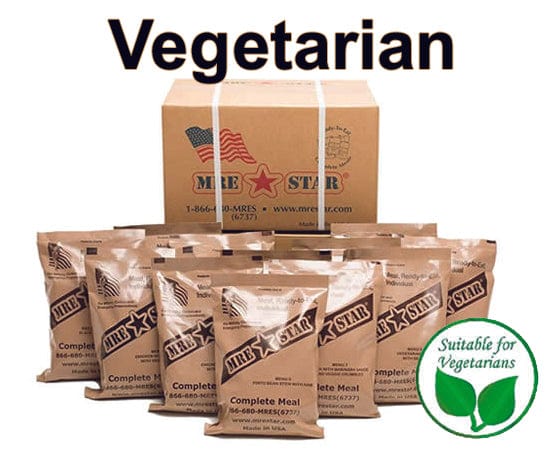
For a low-preparation food layer, MRE STAR M-018H complete meals are fully cooked and include a flameless heater with each meal. Vegetarian households can consider MRE STAR Vegetarian meals. Review storage temperatures, allergens, water requirements, and rotation dates as part of the shelter plan.
For broader comparisons among canned goods, pantry foods, dehydrated meals, freeze-dried food, and MREs, see the Emergency Food Guide.
You May Not Need a Private Bunker to Improve Fallout Protection
A purpose-built shelter can offer advantages, but it is not the only useful protective action. In a radiation emergency, U.S. public-health guidance emphasizes getting inside a substantial building, moving to the basement or center away from exterior walls and the roof, staying inside, and monitoring official instructions. Radioactive material loses strength over time, and initial sheltering is especially important.
That means households can improve readiness by identifying the best available shelter location at home, work, and school; enabling emergency alerts; keeping supplies in accessible locations; and planning how family members will communicate without immediately traveling through fallout. A private bunker should complement—not replace—an alert, communications, evacuation, medical, water, and household sheltering plan.
Frequently Asked Questions
How much does a basic underground bunker cost?
A compact prefabricated fallout shelter commonly starts around $40,000 to $120,000 for the unit. The installed project may be substantially higher after delivery, excavation, crane work, engineering, drainage, permits, utilities, and interior systems.
How much does a 200-square-foot bunker cost?
HomeAdvisor's June 2026 estimate places a 200-square-foot bunker at about $60,000 on average. Treat that as a broad market reference, not a site-specific quote. A difficult property or higher protection specification can push the total far above the average.
Does the advertised bunker price include installation?
Sometimes, but often not completely. A proposal may exclude freight, excavation, soil disposal, crane rental, engineered bedding, backfill, drainage, concrete, utility connections, permits, local engineering, landscaping, and commissioning. Demand a written scope.
Do I need a permit to build an underground bunker?
Usually. Local requirements may include zoning, grading, structural, electrical, plumbing, septic, floodplain, and other approvals. Contact the authority having jurisdiction and qualified local professionals before buying the shelter.
Can a tornado shelter be used as a fallout shelter?
It may provide some shielding because surrounding soil and structural mass can reduce radiation exposure, but a tornado rating does not establish a specific radiation protection factor, filtered-air capability, habitability, or blast performance. Those functions require separate evaluation.
How deep should an underground bunker be?
There is no universal safe depth. Soil cover is only one part of shielding and structural design. Groundwater, buoyancy, soil pressure, drainage, entrance geometry, ventilation, exits, blast assumptions, and nearby structures matter. Depth should be determined by the site's engineered design, not a generic online rule.
Are underground bunkers safe in floods?
Not automatically. Underground spaces can be especially vulnerable to water intrusion, blocked exits, sewer backup, power loss, and buoyancy. Flood exposure and emergency egress must be evaluated before choosing a site.
How long should supplies last?
The answer depends on the hazard and official instructions. For radiation emergencies, authorities may initially advise remaining inside for at least 24 hours and potentially longer. A private shelter intended for extended occupancy requires a plan based on its rated capacity, water, sanitation, air, power, food, medical needs, and resupply assumptions.
Final Assessment
For most homeowners, the answer to “How much does a bunker cost?” is not a single catalog price. A compact prefab unit may begin around $40,000, but a credible installed family shelter commonly becomes a six-figure construction project once site work and life-support systems are included.
Start with the hazard, site, and professional design—not the floor plan or interior finish. Compare proposals on total installed scope, documented engineering, ventilation, water, sanitation, drainage, emergency exits, maintainability, and code approval. The safest purchase is not necessarily the shelter with the strongest marketing claim; it is the project whose design assumptions, responsibilities, limitations, and lifecycle costs are clear before construction begins.