My Patriot Supply and the Patriot Pantry name have long appeared in searches for long-term emergency food. Older product reviews often describe Patriot Pantry meal kits, storage totes, freeze-dried ingredients, and large serving-count packages. Today, shoppers are more likely to encounter My Patriot Supply's current emergency-food lineup under the Ready Hour name.
That change matters because old menu lists, serving counts, prices, package sizes, and shelf-life statements may no longer describe what is currently sold. This updated guide explains what Patriot Pantry represented, how to evaluate modern long-term food kits, and when a ready-to-eat option such as MRE STAR may be a better fit.
Prepared Bee product-status notice: Prepared Bee previously sold products associated with this category but no longer promotes or sells the Patriot Pantry or My Patriot Supply food products discussed here. This page is retained as an informational guide for readers researching the brand. For a currently available alternative, see the MRE STAR options later in this article.
What Is Patriot Pantry from My Patriot Supply?
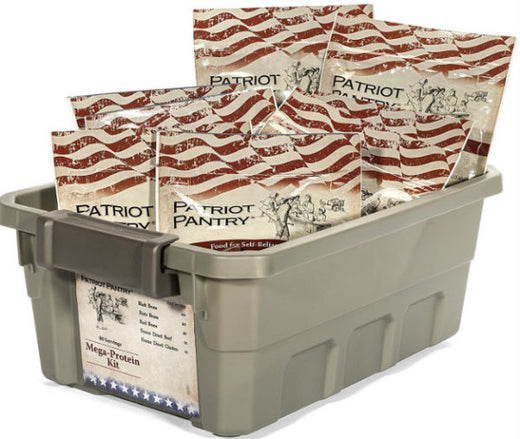
Patriot Pantry is an older brand name associated with My Patriot Supply's emergency-food products. Historical offerings included meal pouches, food buckets, short-term kits, long-term packages, fruits and vegetables, meat and protein products, breakfast foods, drink mixes, and bulk ingredients.
The current My Patriot Supply catalog prominently uses the Ready Hour name for emergency food. That does not make older Patriot Pantry information useless, but it does mean a legacy review should not present an old menu or serving count as a current specification.
“Patriot Pantry” still appears in older reviews, marketplace listings, cached pages, and customer searches.
“Ready Hour” is the name now emphasized throughout My Patriot Supply's current emergency-food collection.
The category primarily consists of dehydrated or freeze-dried foods, meal mixes, ingredients, pouches, buckets, and #10 cans.
Many foods require water, measuring, mixing, heating, simmering, or another preparation step before eating.
Consumers researching Patriot Pantry should therefore focus less on a years-old menu list and more on the exact label, calorie total, storage directions, water requirement, preparation method, allergens, and expiration information for the current item being considered.
How Long-Term Bucket Food Works
Long-term emergency-food kits are commonly built around dry ingredients and meal components sealed in protective pouches, then grouped inside buckets or totes. Removing much of the moisture can extend storage life, but the food normally depends on a separate water supply and may require cooking.
Freeze-Dried and Dehydrated Foods Are Not Identical
Freeze-drying removes moisture from frozen food under vacuum, while dehydration uses heat and moving air. Either method can produce shelf-stable food when the product is correctly formulated and packaged. The finished texture, rehydration time, taste, storage claims, and price can differ considerably.
Do not assume that every item in a bucket uses the same preservation method. A kit can combine dehydrated meal mixes, freeze-dried ingredients, powdered drinks, grains, beans, and other components.
The Advertised Number of Servings Is Not the Full Answer
A “serving” is a manufacturer-defined quantity—not necessarily a complete meal. A large serving count can include drinks, desserts, sides, or small portions. To understand how much food a kit really provides, calculate:
- Total calories in the entire package
- Calories per person per planned day
- Number of main dishes versus drinks, snacks, and sides
- Total protein and dietary variety
- Water and fuel required to prepare everything
This is one reason the current market increasingly describes larger supplies by approximate calories per day in addition to serving counts.
“Up to 25 Years” Is a Conditional Claim
Some long-term foods are marketed with storage life of up to 20 or 25 years. That figure does not apply automatically to every component, and it normally assumes unopened, intact packaging stored under specified conditions. Dairy, meat, fats, eggs, drink mixes, and opened pouches may have different dating.
Always record the printed date from the product you actually receive. Store food in a cool, dry, stable location away from sunlight, pests, flooding, chemicals, and repeated temperature swings.
How to Evaluate My Patriot Supply or Any Long-Term Food Kit
- Compare total calories. Do not rank kits solely by servings, bucket count, or shipping weight.
- Calculate water requirements. Rehydrating dry food can consume water you also need for drinking and sanitation.
- Check cooking requirements. “Just add water” may still mean boiling, simmering, or waiting—not simply opening and eating.
- Separate meals from extras. Count entrées, sides, drinks, desserts, and ingredients independently.
- Review protein sources. Determine how much comes from meat, dairy, eggs, beans, soy, grains, or added ingredients.
- Read allergen labels. Wheat, milk, soy, egg, and other common allergens appear frequently in packaged emergency meals.
- Check sodium and dietary needs. People with medical or dietary restrictions may need a separately designed supply.
- Confirm every shelf-life category. The shortest-lived component may determine when part of the kit needs replacement.
- Consider opened-pouch storage. A pouch containing many servings creates a storage problem once opened.
- Test before buying in bulk. Taste, texture, digestion, preparation, and cleanup matter during a stressful disruption.
Calories Per Day Matter More Than a Dramatic Serving Count
Divide the kit's total calories by the number of people and planned days. For example, a kit marketed for four weeks should be evaluated by the actual daily calories it supplies—not merely whether its serving count sounds large.
Individual needs vary with age, body size, activity, climate, health, pregnancy, and other factors. The purpose of the calculation is not to prescribe a universal intake. It is to prevent the word “servings” from hiding how much energy is actually available.
Water and Fuel Can Become the Hidden Cost
Dry food is compact because much of its water has been removed. That advantage becomes a limitation if tap water is unavailable or cooking fuel is scarce. Add the preparation water to your household's drinking-water plan, and calculate fuel for every item that requires boiling or simmering.
For a broader storage plan, start with Prepared Bee's Emergency Food Guide and use How Much Emergency Food Should I Store? to estimate an appropriate household supply.
Patriot Pantry and Long-Term Bucket Food: Pros and Limitations
| Potential advantage | What to verify |
|---|---|
| Long unopened storage | Exact printed expiration and storage temperature for every component |
| Compact dry-food format | Total water and fuel required for preparation |
| Large package sizes | Actual calories per day and number of true meal portions |
| Menu variety | Whether variety comes from entrées or from drinks, desserts, and sides |
| Buckets or totes | Weight, portability, waterproofing, pest resistance, and storage footprint |
| Lower cost per serving | Cost per calorie and cost per usable meal instead of advertised serving |
| Familiar comfort foods | Ingredients, allergens, sodium, protein, and household acceptance |
What the Older Article Got Wrong
The previous version treated historical product details as permanent facts and made broad claims that every product was balanced, non-GMO, free of MSG, made in the United States, and suitable for storage up to 25 years. Those statements should never be applied across an entire changing catalog without checking the exact current label.
It also used aggressive language such as “must-try” and “grab this product now,” even though Prepared Bee no longer sells or promotes the line. Those recommendations and the obsolete product-by-product catalog have been removed.
MRE STAR: A Ready-to-Eat Alternative
Long-term dry-food buckets and MREs solve different problems. Bucket food is designed to store many dry servings efficiently, often for years or decades. MREs are complete, fully cooked meals designed to be eaten without a conventional kitchen. They are heavier and generally have a shorter stated shelf life, but require far less preparation.
Why Consider MRE STAR?
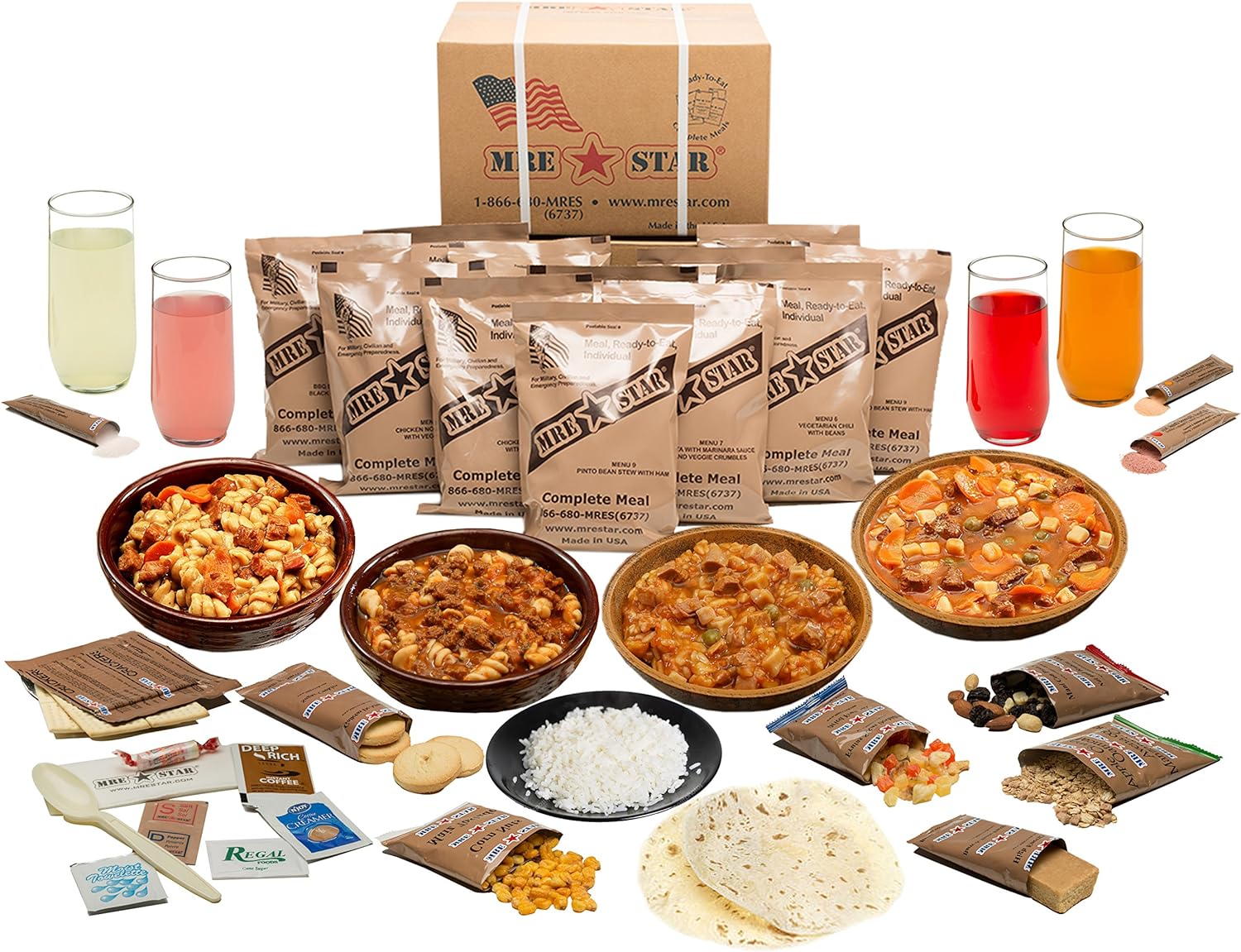
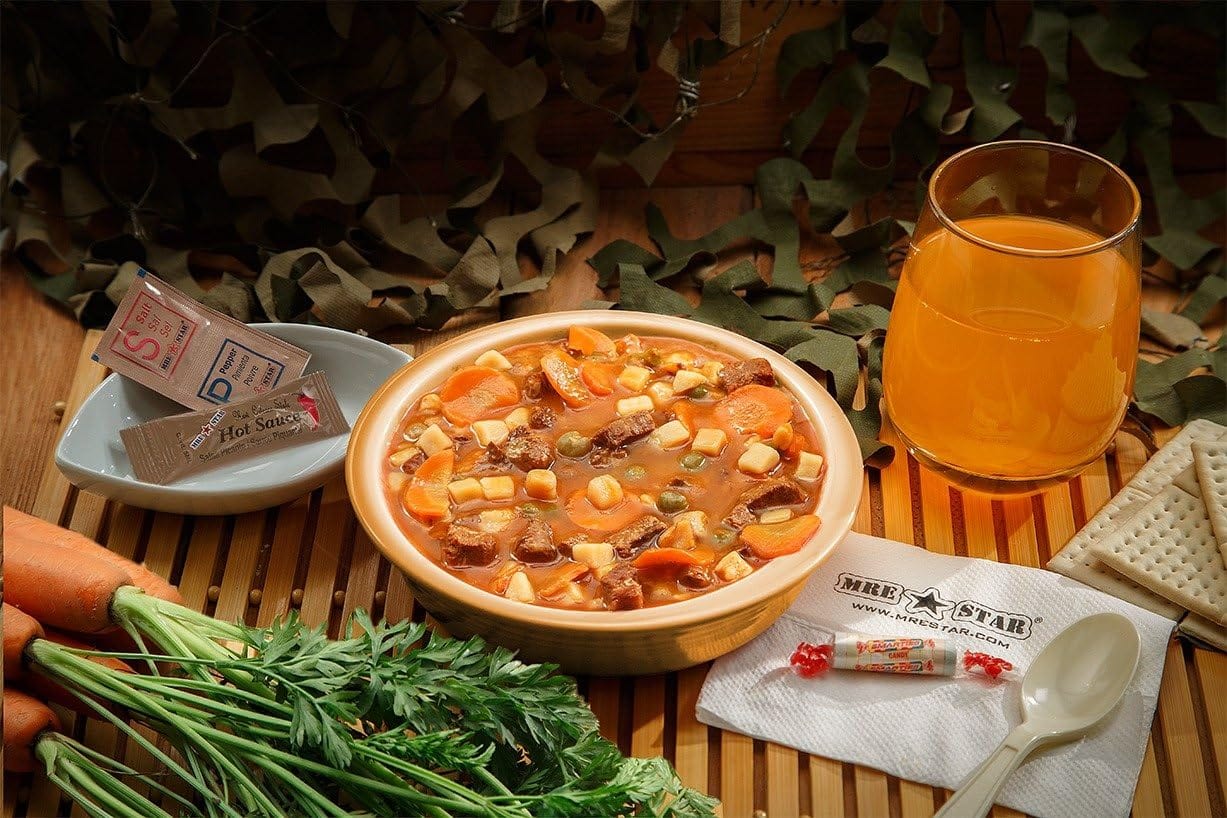
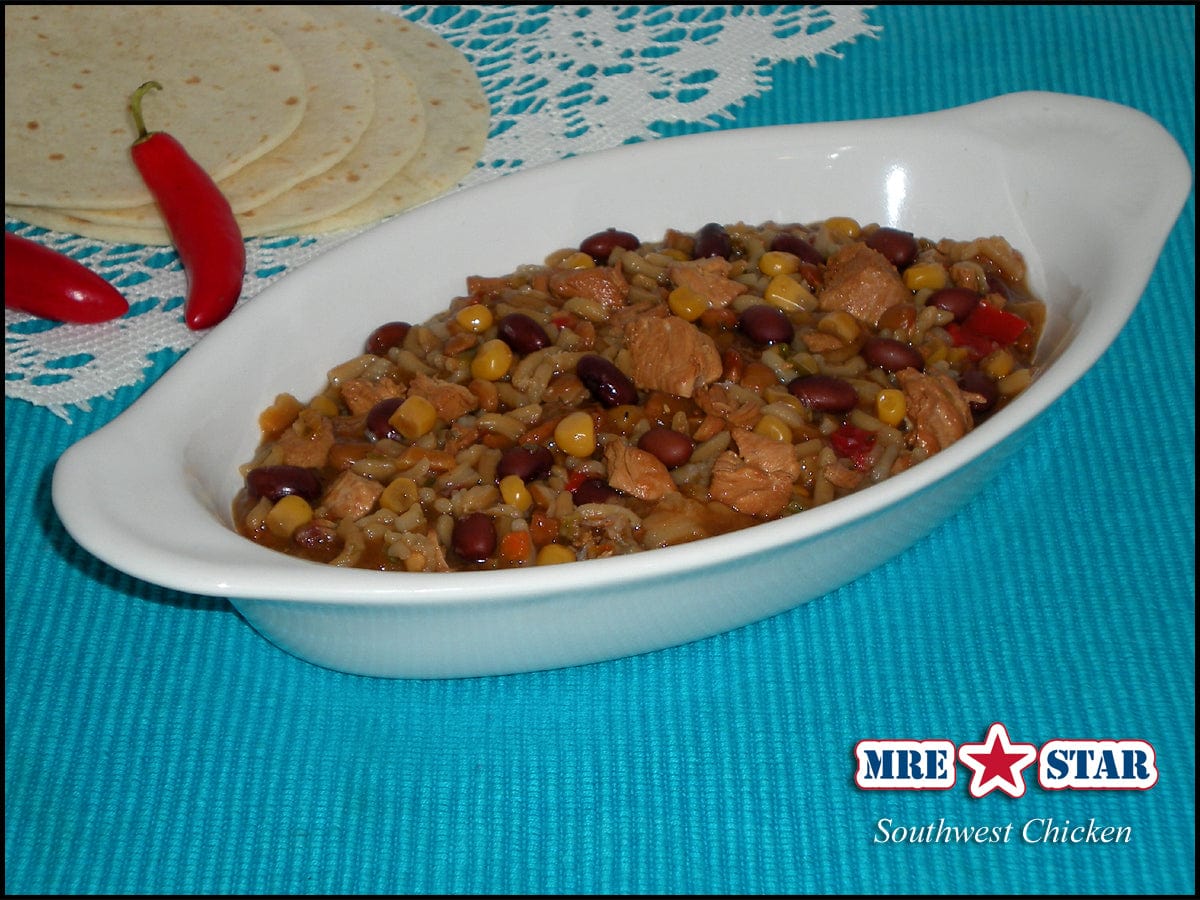
The MRE STAR M-018H contains 12 complete MRE meals with flameless ration heaters. Each meal includes a fully cooked entrée plus additional food components, beverage mix, accessories, and its own heater. The entrée can be eaten hot or cold, requires no refrigeration before opening, and does not need water for rehydration.
A mixed assortment of 12 complete meals with heaters and approximately 1,200 calories per meal on average.
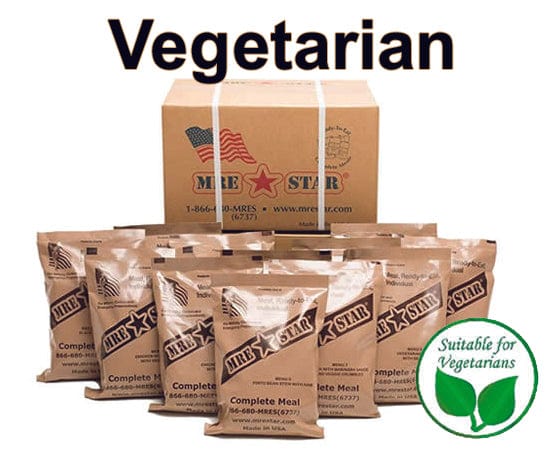
Twelve complete vegetarian meals with four entrée varieties and a heater for every meal.
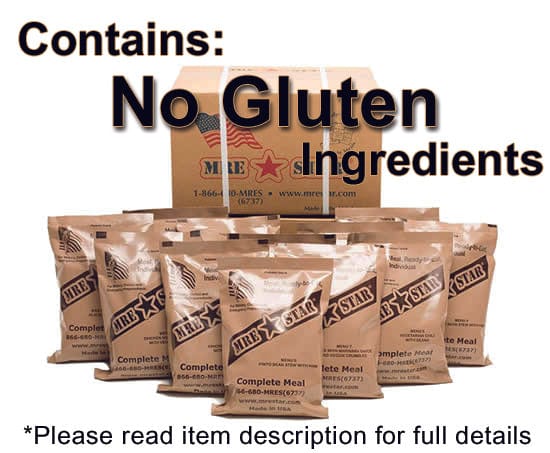
Twelve complete meals made without gluten ingredients; review the important shared-equipment cross-contact notice.
Learn about MRE contents, calories, storage temperature, heaters, and civilian versus military rations in our Complete Guide to MREs.
Long-Term Food Buckets vs. MRE STAR
| Feature | Long-term dry-food bucket | MRE STAR complete meals |
|---|---|---|
| Primary purpose | Efficient storage of many dry servings | Complete meals ready for immediate use |
| Cooking | Often requires heating or simmering | Not required; entrée is fully cooked |
| Water | Often required for rehydration and cooking | No water to rehydrate the entrée; a small amount activates the heater |
| Meal format | Multi-serving pouches, ingredients, sides, or meal mixes | Individually packaged complete meals |
| Portability | Efficient in bulk but may require cookware and water | Self-contained but heavier per meal |
| Storage horizon | Some items claim substantially longer unopened storage | MRE STAR states up to five years at 70°F or cooler |
| Best fit | Home storage with water, fuel, and preparation equipment | Outages, evacuation, travel, field use, and immediate meals |
This is not an argument that MREs should replace every long-term food. A resilient supply can combine ordinary pantry foods, selected long-term dry foods, and a ready-to-eat layer for the first days of an outage or evacuation.
How to Build a Better Layered Food Supply
- Begin with food you already eat. Rotate canned foods, grains, shelf-stable proteins, and other normal pantry items.
- Add a ready-to-eat layer. Keep complete MREs or other foods that do not depend on refrigeration or normal cooking.
- Add longer-storage foods selectively. Choose products after comparing total calories, water, fuel, ingredients, and dating.
- Store water and a safe cooking method. Dry food is not useful if you cannot prepare it.
- Plan around dietary needs. Keep suitable food for children, older adults, allergies, medical diets, and cultural or religious preferences.
- Maintain an inventory. Record quantity, calories, expiration dates, preparation water, and storage location.
- Review twice a year. Rotate ordinary food and inspect long-storage packaging for damage or pests.
The Preparedness Resource Center can help connect your food plan with water, power, navigation, self-sufficiency, and other household preparedness needs.
Frequently Asked Questions
Does Prepared Bee still sell Patriot Pantry or My Patriot Supply food?
No. Prepared Bee no longer promotes or sells the Patriot Pantry and My Patriot Supply food products discussed in this article. The page is maintained for informational purposes and to help readers evaluate long-term emergency food.
Is Patriot Pantry still available?
The Patriot Pantry name remains visible in older articles and some marketplace listings. My Patriot Supply's current direct emergency-food catalog emphasizes the Ready Hour brand. Because product naming and assortments change, verify any listing directly from its current packaging and seller information.
Is My Patriot Supply the same as 4Patriots?
No. My Patriot Supply and 4Patriots are separate companies. Similar names and overlapping product categories sometimes cause confusion.
Does all Patriot Pantry food last 25 years?
No single shelf-life claim should be applied automatically to an entire catalog. Storage life varies by product and assumes specified storage conditions. Use the date and instructions printed on the exact package.
Are long-term food buckets complete nutrition?
Not necessarily. Kits can contain entrées, sides, grains, drinks, desserts, and ingredients in different proportions. Review total calories, protein, fats, vitamins and minerals, sodium, ingredients, and variety rather than assuming a bucket is nutritionally complete.
What is a good alternative to Patriot Pantry?
If your priority is individually packaged food that can be eaten immediately without rehydrating an entrée, MRE STAR complete meals are a practical alternative. For decades-long dry storage, MREs are not a direct substitute; use a layered plan that includes appropriate pantry and long-storage foods.
Do MRE STAR meals need water or cooking?
The entrée is fully cooked and can be eaten hot or cold without rehydration. A small amount of water is needed to activate the included flameless heater, and beverage mixes require drinking water. Conventional cooking equipment is not required.
Final Assessment
Patriot Pantry remains a useful search term for understanding an earlier generation of My Patriot Supply food products, but the old product catalog should not be treated as a current buying guide. The brand presentation, menus, serving counts, nutrition, prices, and packaging have changed.
Prepared Bee no longer sells or promotes these products. Readers seeking a current, self-contained alternative should consider MRE STAR complete meals with heaters, while recognizing that MREs and long-term dry-food buckets fulfill different roles. The strongest approach is a layered supply built around real calorie totals, adequate water, preparation capability, dietary needs, and food your household will actually eat.
Editorial note: This article is independent informational content and is not a current sales page for My Patriot Supply or Patriot Pantry. Product names, formulas, availability, shelf-life claims, and package specifications may change. Always verify current labels and manufacturer instructions. For general U.S. emergency-kit guidance, consult Ready.gov.