
Build a food supply that works when the power, water, stores, or roads do not—without overspending on food your household will never use.
A dependable emergency food supply is not one giant bucket or a pantry full of identical meals. It is a layered system: ready-to-eat food for the first hours, familiar groceries for a short disruption, and carefully packaged staples or freeze-dried food for longer events. Water, cooking options, dietary needs, storage temperature, and rotation matter just as much as the food itself.
Build an emergency food supply in four layers
Planning by use case is more reliable than shopping by the biggest shelf-life number. Each layer solves a different problem, and the layers work together.

Immediate, no-cook food
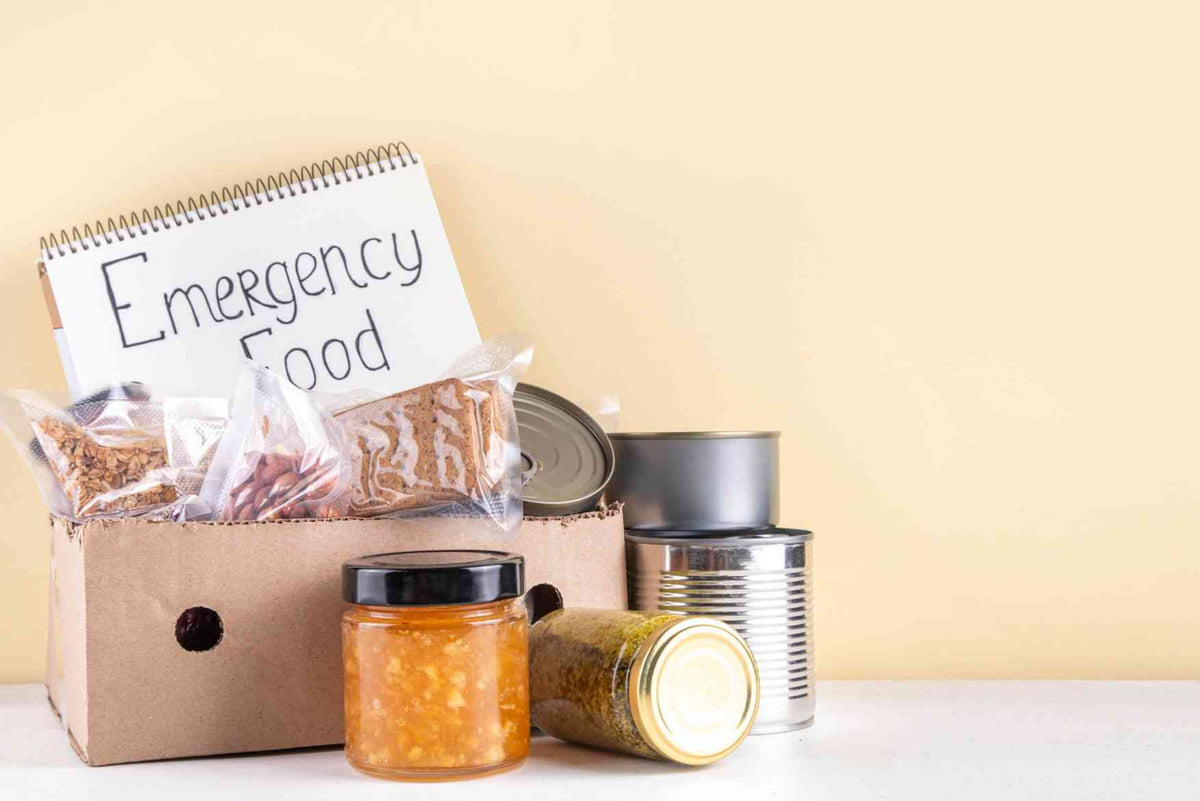
Keep ready-to-eat meals, canned proteins, nut or seed butter, crackers, fruit cups, shelf-stable milk, and snacks for the first 24–72 hours. This layer still works when the stove, refrigerator, and tap do not.
Rotating home pantry
Build a one- to two-week buffer from food you already cook: canned vegetables and beans, pasta, oats, rice, sauces, soup, and shelf-stable proteins. Use the oldest items first and replace them.
Extended storage
Add freeze-dried meals and properly packaged dry staples only after the short-term layer is useful. Choose foods that match your water, fuel, storage space, and cooking skills.
Water and meal support
Food is only half the system. Include drinking and preparation water, a manual can opener, utensils, sanitation supplies, and an outdoor-rated backup cooking method when appropriate.
For a food-by-food shopping list, use our best prepping foods guide. For foods marketed for very long storage, see foods that can last 25 years or more. Those guides go deeper on selection and shelf-life claims; this page focuses on building the complete system.
How much emergency food should you store?

There is no single number that fits every household. A three-day evacuation kit must be portable; a two-week shelter-in-place supply can be heavier and more varied. Start with the most likely disruption where you live, then account for each person's age, activity, health needs, allergies, and usual eating pattern.
Calories can be a useful cross-check, but do not treat 2,000 calories per adult as a universal prescription. Needs vary substantially. Check nutrition labels, count actual servings—not packages—and include enough protein, carbohydrates, fats, fiber, and familiar comfort foods. For a step-by-step household calculation, visit How Much Emergency Food Should I Store?
| Planning horizon | Primary goal | Good food choices | Important constraint |
|---|---|---|---|
| 24–72 hours | Immediate resilience or evacuation | MREs, canned meals, bars, nut butter, dried fruit | Portability and no-cook access |
| 1–2 weeks | Home disruption | Normal pantry foods plus ready-to-eat backups | Water, fuel, and food rotation |
| 30 days | Supply-chain or utility interruption | Broader pantry, dry staples, canned food, selected freeze-dried meals | Nutrition, variety, storage space |
| 3+ months | Longer-term reserve | Properly packaged staples and long-life commercial foods | Packaging, temperature, cooking resources, skills |
Plan water at the same time

A common baseline is one gallon of water per person per day for drinking and sanitation. Store more for hot climates, pregnancy, illness, pets, and foods that require rehydration. A pouch that says “just add water” shifts part of your food plan into your water plan. Follow the container manufacturer's storage and replacement instructions, and never use water exposed to floodwater unless public-health authorities say it is safe.
Types of emergency food: strengths and tradeoffs
| Food type | Water or cooking | Main advantage | Tradeoff | Best role |
|---|---|---|---|---|
| MREs | Ready to eat; optional heater | Complete, self-contained meals | Heavier and usually costlier per meal | Outages, evacuation, vehicles |
| Canned food | Many items can be eaten cold | Affordable, familiar, easy to rotate | Heavy; can opener often needed | Short-term home pantry |
| Freeze-dried food | Usually needs measured water | Lightweight with long labeled life | Water-dependent; higher cost | Extended storage and portable kits |
| Dry staples | Usually need water, time, and fuel | Low cost and flexible | Preparation-intensive | Longer home disruptions |
| Bars and snacks | None | Portable and immediately usable | Limited variety and meal completeness | Go-bags and quick calories |

Canned food and ordinary groceries
Canned beans, fish, chicken, fruit, vegetables, chili, soup, and pasta meals are practical because many are safe to eat without heating. Low-acid canned goods generally keep their best quality longer than high-acid foods such as tomatoes and pineapple, but the label and storage conditions should guide you. Reject cans that are leaking, bulging, badly rusted, or deeply dented—especially along seams.
Freeze-dried and dehydrated food
Freeze-dried food is light and can carry a long manufacturer-rated shelf life while sealed. It is not automatically the best first purchase: most meals need safe water, and hot water improves texture. Dehydrated foods vary more in cooking time and storage life. For both, record the label date, protect packaging from punctures, and follow the maker's instructions after opening.
Dry staples
White rice, dry beans, rolled oats, pasta, flour, sugar, and salt can make a reserve more economical. However, “dry” does not mean “ready.” Beans and rice consume water and fuel, and whole-grain foods generally have more oils that limit storage life. Package only shelf-stable, low-moisture foods with methods appropriate to that food; oxygen absorbers are not suitable for moist foods. If you are new to bulk storage, university extension guidance or commercially sealed products reduce guesswork.
Where MREs fit in an emergency food plan
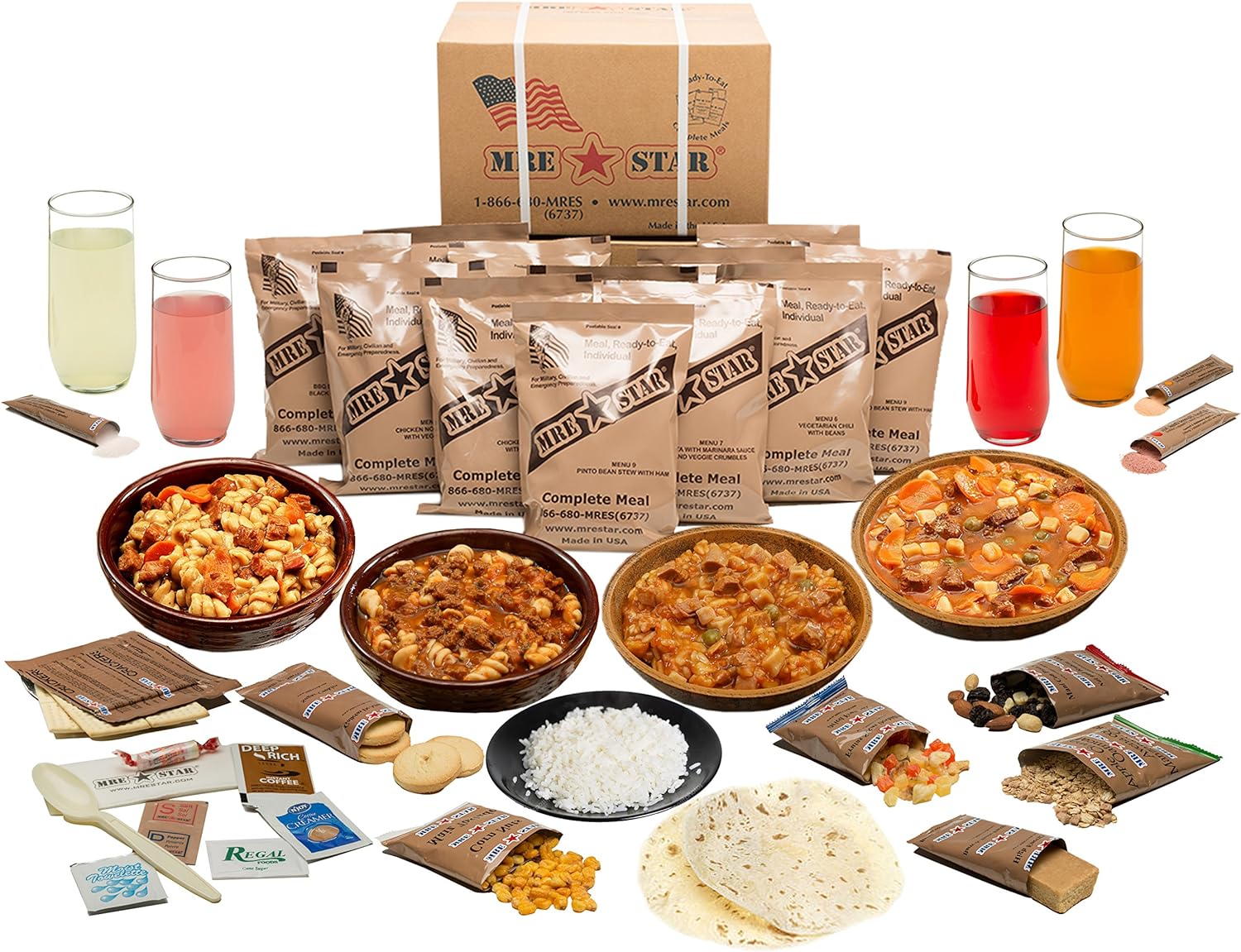
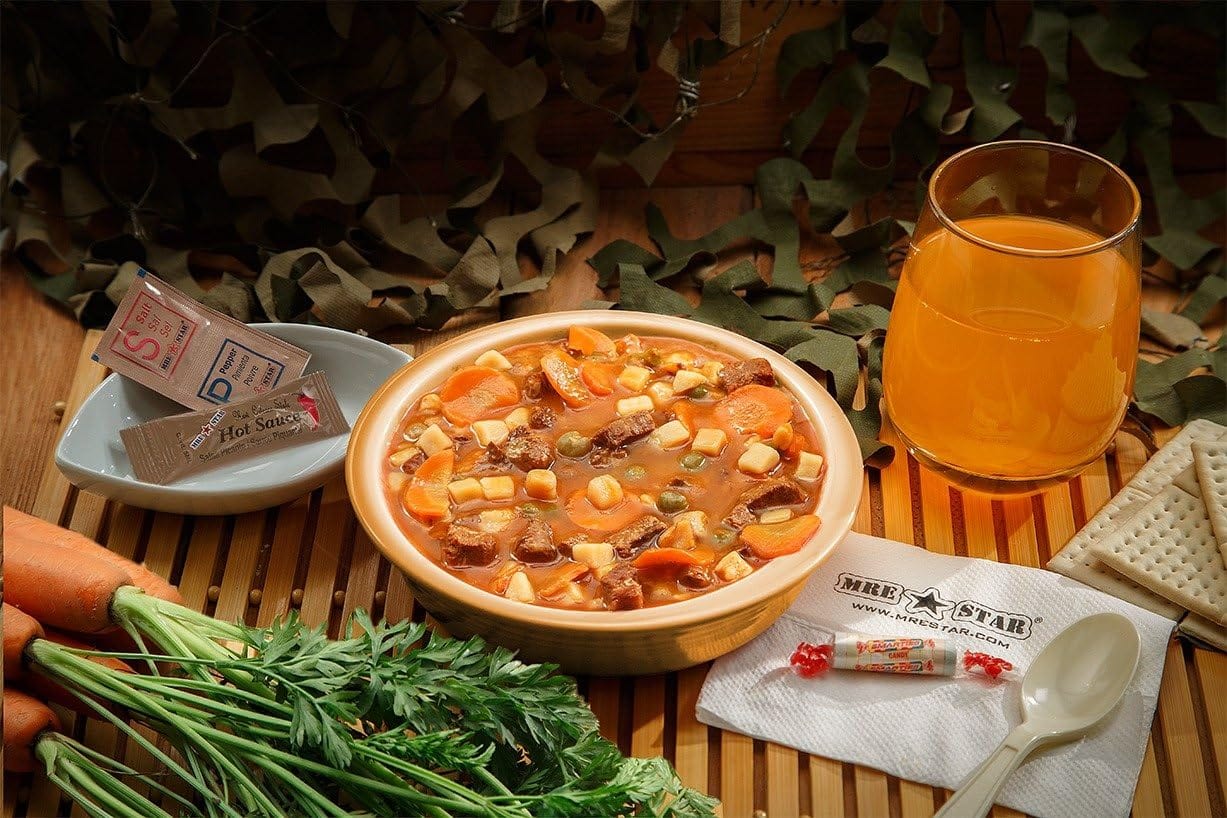
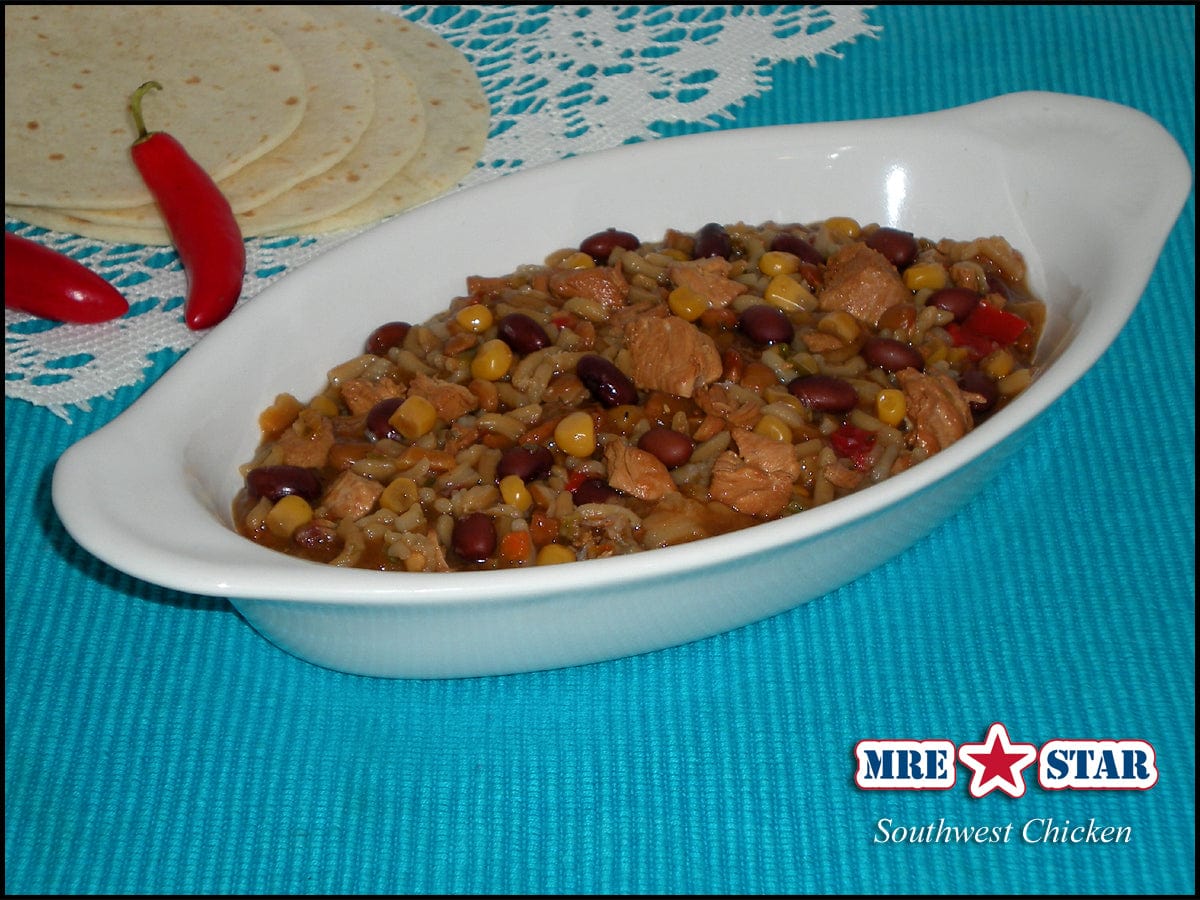
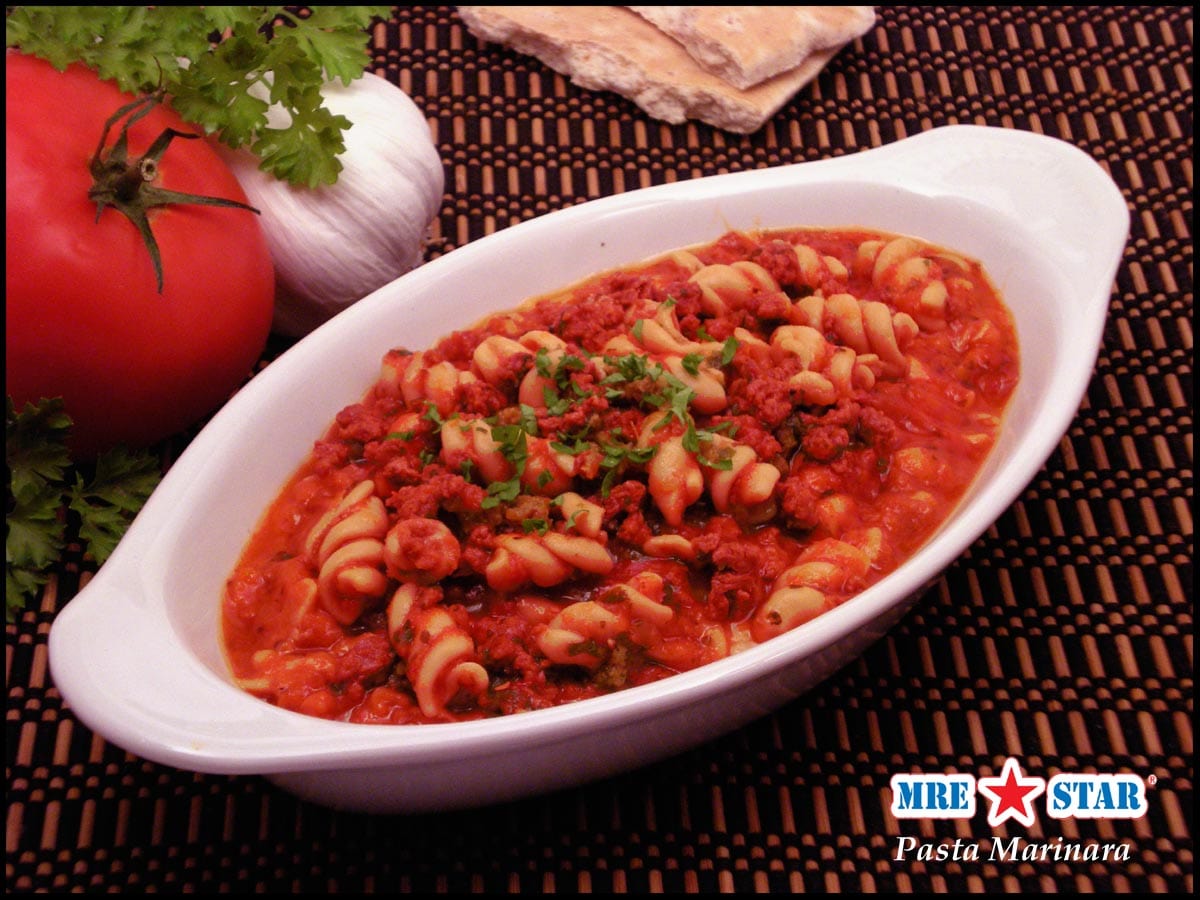
MRE means Meal, Ready to Eat. The entrée is fully cooked and can be eaten from the pouch without refrigeration before opening. A complete meal may also include sides, snacks, a drink mix, utensils, seasonings, and a flameless ration heater. That convenience makes MREs especially useful when cooking is impractical.
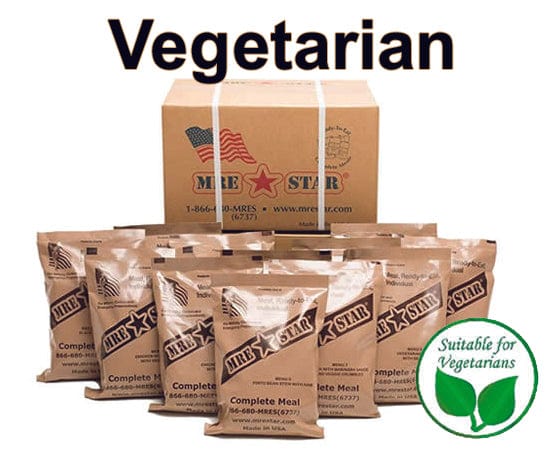
MRE STAR complete meals
MRE STAR cases contain 12 complete meals with flameless heaters. The standard meals provide approximately 1,200 calories each and are rated for up to five years when stored at 70°F or cooler; sustained heat shortens storage life. They require no water to rehydrate the entrée, although a small amount of water is needed to activate the heater.
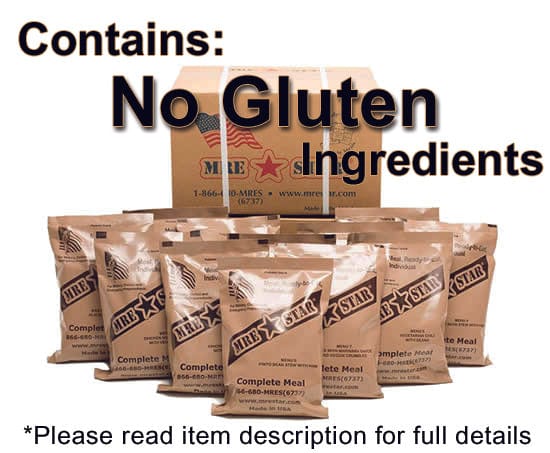
Dietary note: “No Gluten” is not the same as certified gluten-free. The MRE STAR No Gluten meals are not certified gluten-free, and cross-contact may be possible. Anyone with celiac disease, severe allergies, or a medically prescribed diet should review current ingredient and allergen information and consult an appropriate clinician when needed.
MREs are not a complete pantry by themselves. They are relatively heavy, and repeated use may not suit every person's nutritional needs. Use them as a dependable no-cook layer alongside water, familiar pantry food, and longer-term options. Our complete guide to MREs covers components, heaters, storage, and menu selection in more detail.
Store food for the conditions it will actually face

Heat, moisture, oxygen, light, pests, and damaged packaging all work against storage life. A cool interior closet is often better than an attic, shed, or garage with wide temperature swings. Keep supplies off the floor and away from plumbing, chemicals, direct sunlight, water heaters, and other heat sources.
Use FIFO
First in, first out means placing newer purchases behind older ones. Mark the purchase or packing date, use the oldest acceptable item first, and add its replacement to the next shopping list.
Inspect twice a year
Review dates, package seals, rust, swelling, pests, water damage, and your household's changing dietary needs. Also check the manual can opener and any cooking equipment.
Respect product-specific labels
Shelf life is not one universal clock. Food type, packaging, temperature, and manufacturer testing matter. Never extend a commercial product's claim simply because a similar product lasts longer.
Separate quality from safety
Most packaged-food date labels refer to quality, not an automatic safety cutoff; infant formula is a key exception under federal rules. Damaged packages and unsafe storage conditions can matter more than the printed date.
Do not taste questionable food to decide whether it is safe. When a package is swollen, leaking, spurts liquid, smells abnormal, is moldy, or may have contacted floodwater, follow government disposal guidance. When in doubt, throw it out.
Food safety during a power outage

Keep refrigerator and freezer doors closed. According to USDA guidance, an unopened refrigerator keeps food cold for about four hours. A full freezer holds a safe temperature for about 48 hours, or about 24 hours if half full. Use an appliance thermometer if available, and discard perishable food that has been above 40°F for two hours or more. Never rely on taste or smell alone.
Choose a cooking setup before an emergency, not during one. Keep a portion of your supply edible without heat. If an approved outdoor cooking method is part of the plan, store the correct fuel safely and know how to use the equipment. Flameless ration heaters must also be used exactly as labeled and with appropriate ventilation.
Match food to the emergency

| Scenario | Prioritize | Watch for |
|---|---|---|
| Power outage | No-cook meals; refrigerated food only while it remains safe | Temperature, CO risk, limited lighting |
| Hurricane or winter storm | Two-week home buffer where feasible; easy-prep meals | Blocked roads, water advisories, long outages |
| Flood | Sealed food and water stored above likely flood level | Contamination; discard exposed food as directed |
| Wildfire evacuation | Compact ready-to-eat food and water | Weight, heat in vehicles, evacuation timing |
| Earthquake | Accessible food, water, and manual tools | Broken containers, gas leaks, disrupted utilities |
Make the plan work for the whole household
Store foods people can safely eat and will willingly eat under stress. Include infant feeding supplies, age-appropriate foods for children, easy-open and easy-chew options, religious or ethical preferences, low-sodium choices where appropriate, and backup items for allergies or medical diets. Keep a current list of critical dietary restrictions with the kit.

Try a few emergency meals before buying a large quantity. A practice dinner reveals missing water, fuel, utensils, seasoning, or instructions—and whether anyone actually likes the food.
Emergency food checklist

- Several days of ready-to-eat food, expanding toward two weeks at home when practical
- One gallon of water per person per day as a starting point, plus preparation water
- Protein sources, carbohydrates, fats, fruit or vegetables, and familiar comfort foods
- Meals that require no refrigerator, stove, or safe tap water
- Manual can opener, utensils, cups, paper towels, trash bags, and sanitizer
- Food for infants, older adults, allergies, medical diets, and pets
- Labels showing purchase or packing dates and a written inventory
- Cool, dry, pest-resistant storage away from chemicals and flood risk
- Smoke and carbon-monoxide alarms with working batteries
- A six-month calendar reminder to inspect, use, and replace supplies
Emergency food FAQs
What emergency food should a beginner buy first?
Start with several days of water and familiar nonperishable groceries that need little or no cooking: canned proteins and meals, peanut butter or an allergy-safe alternative, crackers, fruit, shelf-stable beverages, and ready-to-eat meals. Add a manual can opener. Expand gradually after testing what your household uses.
How long does emergency food last?
It depends on the food, packaging, storage temperature, and manufacturer's testing. Canned food, MREs, dry staples, and freeze-dried food have different useful lives. Treat any “up to” claim as dependent on intact packaging and specified storage conditions.
Are MREs better than freeze-dried meals?
Neither is universally better. MREs are fully cooked and need no rehydration, making them useful when water or cooking is limited. Freeze-dried meals are lighter and may have a longer labeled shelf life, but normally require safe water. Many plans benefit from both.
Can food be eaten after a best-by date?
A best-by date commonly indicates expected quality rather than a universal safety deadline, but storage history and package condition still matter. Follow product-specific instructions and government food-safety guidance. Infant formula should not be used after its “use by” date.
Can emergency food be stored in a garage?
Only if temperature and moisture stay within the product's storage limits. Many garages become extremely hot or freeze, shortening quality and shelf life. A cool interior closet is usually more stable.
How often should supplies be checked?
Check at least twice a year and after any leak, flood, pest problem, or extreme heat event. Rotate ordinary pantry food continuously and follow each long-term product's label.
Is a two-week supply mandatory?
No. It is a useful Red Cross planning benchmark for home supplies, not a universal rule. Begin with several days, then build toward the level that fits local hazards, space, budget, and household needs.