

Most people in the U.S. do not wake up thinking about wars in other parts of the world. Honestly, it’s more normal to take life as it is locally.
We’re already so busy with work, bills, groceries, the commute, and deadlines. So, naturally, global conflicts feel distant, like something that belongs in the news rather than daily life.
But over time, small things start to feel different. We don’t notice it most of the time, though. But we do see how gas prices move up and down more than usual. Some products take longer to arrive. Certain electronics get more expensive.
And most of all, grocery prices shift in ways that are hard to explain. None of this happens all at once. That’s very important to note, or at least, notice. It shows up quietly, in ordinary places.
In 2026, what was once a war in another country continues to influence how the global economy works. So, in effect, it affects everyone, including you.
Modern supply chains connect countries in complex ways. When one part of that system is disrupted, the impact travels across borders. And eventually, it reaches American consumers.
The United States depends on international networks for food, shipping, fuel, and technology. Oil markets respond to international unrest. Electronics rely on parts manufactured in several nations.
Agricultural inputs and food are imported from areas impacted by conflict or political unrest. When risks rise, shipping routes may alter or slow down. Even though each disruption might not seem like much on its own, taken together, they affect daily costs and availability.
This does not imply that American life will collapse. It implies that international conflicts are no longer limited to events in other countries.
These are economic factors that subtly affect day-to-day existence. Even though distant wars seem far away, it is easier to understand why they are important when you know how this occurs. And in this article, we'll talk exactly just about that.
What Is a Supply Chain?
The system that transports goods from the point of manufacture to the point of use is known as a supply chain. Honestly, you can think of it this way. A lengthy relay, if you will.
Raw materials are extracted from farms or the ground. These materials undergo processing. Parts are manufactured. Items are put together. After that, they are shipped, stored, and ultimately offered for sale to clients. Each step depends on the previous one.
Most supply chains in the modern world are international. A single product may use technology from Europe, materials from South America, processing in Asia, and final assembly in another location.
Food, fuel, apparel, electronics, and many other daily services fall under this category. Global supply chains enable businesses to meet demand while keeping costs low. They also contribute to the expansion of the world economy.
But honestly, there are flaws in this system. Long routes increase the likelihood of interruptions. There is little margin for delay because many businesses rely on just-in-time inventory. P
Production is often concentrated among a small number of key suppliers or geographic areas. Ideally, though, it all goes well when everything goes according to plan.
But what happens when there’s conflict? Well, when conflict arises, issues quickly proliferate.
Infrastructure damage, port closures, and factory shutdowns are all possible outcomes of armed conflict. Armed groups may threaten shipping lanes and vital services. Yes, that happens.
Though for security purposes, governments may alter trade regulations overnight. Because of this, businesses may find it difficult to obtain supplies, control expenses, or meet consumer demand.
As you can imagine, the flow of goods throughout the entire chain can be impacted by even minor disruptions. That’s how it works.
Businesses and governments have begun to pay more attention to supply chain resilience in recent years. That is how IMPORTANT this is.
What they do, basically, is some sort of risk assessment, supplier diversification, and investments in improved management and communication systems.
As you can see, global supply chains remain intricate and vulnerable to developments occurring well outside the United States. It’s not happening here yet, but yes, it does affect all of us.
And even though the fighting seems far away, it is easier to see how supply chains can affect American daily life in 2026.
Geopolitical Risks in 2026: What's Happening?

In 2026, conflicts around the world will not be confined to a single location or kind of conflict. There are just so many types that can happen. For instance, in some parts of Eastern Europe, tensions still exist.
The Middle East is still plagued by instability. Also, there is still conflict in the South China Sea. With multiple countries, at that.
Uncertainty is also increasing in other areas. Think about Africa and South America. There are armed groups and political instability. Apart from humanitarian costs, they also affect international trade and business.
So, you get the drill. A lot of things can happen. And mind you, these countries (or regions) are crucial to the world economy. For example, energy exports and production are heavily reliant on the Middle East.
Global manufacturing, technology, and industrial supply chains are intimately linked to Europe. Asia is essential for the production of semiconductors, electronics, and materials used globally.
Narrow chokepoints like the Suez Canal and the Strait of Hormuz are traversed by vital shipping lanes. So, of course, risk increases rapidly when these areas are threatened by conflict.
And again, the effects are not confined to the area. First to respond are the financial markets. Prices for energy fluctuate. The cost of shipping insurance rises. Businesses modify their plans to safeguard their operations.
Governments reconsider their security and procurement strategies. These choices affect imports, manufacturing costs, and product availability over time.
Basically, risk really moves from conflict areas to consumers in this way. So, in a way, the United States need not be the target of a war in order for it to have an impact on American life.
It just needs to disrupt the systems the United States depends on. And in so many cases, they do. The cost of imported food may increase.
It may take longer for consumers to receive technology products. Even in the absence of a physical shortage, fuel prices may increase. Higher operating costs for essential services may be passed on to households.
So, as you can see, it affects us one way or another. The world is a global village, after all.
Fuel Markets: The Everyday Price of Distant Tensions

Fuel is one of the fastest ways global conflict shows up in everyday American life. Oil-and-gas markets, by design, are global.
Prices are not set only by what "happens" inside the United States but are shaped by production, demand, and risk across the world.
Two main benchmarks guide oil prices: West Texas Intermediate reflects U.S. production, and Brent is used more widely in global markets.
These benchmarks influence what refineries pay for crude oil. Futures markets then layer on expectations about the future.
Traders react to news about war, sanctions, and security risks. Even the possibility of disruption can move prices before any supply is actually lost. That's how "drastic" it can become.
Armed conflict works in three ways. Conflict has a chance to stop the supply. It has a chance to destroy infrastructure. Armed groups pose a risk to pipelines, export ports, and shipping routes.
A government has a chance to limit exports or tap into strategic reserves. All of these contribute to some level of uncertainty. Markets are often more sensitive to changes in uncertainty than supply.
What this does to U.S. households is evident at the gas pump. Gasoline prices increase when oil becomes more costly to obtain and transport.
Similarly, home heating oil prices may rise when temperatures dip. It becomes more costly to transport goods by truck, which translates into increased prices in food products and other consumer goods.
Consider for a second a simple example. A family that spends a fixed amount on gasoline every month then finds those prices rise. They do not necessarily drive less, but the cost still increases.
That additional expenditure cuts what remains for groceries, services, or savings. Companies also have similar decisions. Higher fuel costs ripple through delivery and operational expenses, affecting pricing decisions. Over time, most of this increase is absorbed by consumers.
Still, the risk can be mitigated through investments in domestic production, alternative energy, and better fuel management. But, this is not to say we should be complacent. We need to stay informed and prepare. That's just the key.
Tech and Electronics: Why Your Gadgets Can Be Late
Modern technology relies on long global supply chains to function. It needs semiconductors to do this.
To put it simply, semiconductors are components of phones, computers, automobiles, and intelligent machines. Without them, much of the digital economy will grind to a halt. Yes, that level of dependency.
Semiconductors include different materials that are sourced from different places in the world. Some of them might even come from areas affected by conflict.
There might even be some that need special processing services that few places in the world provide. They include industries from places like Asia, Europe, and the United States.
Global conflicts in 2026 continue to threaten this process. Shipping congestion still poses a problem, as shipping routes are shifting to lower-risk areas.
Issues over export restrictions are common, especially in situations where there are concerns over a nation’s interest (or, really, overall technology tradeability).
Labor shortages continue to affect manufacturing processes, as they do at ports.
From a consumer perspective, it is easy to see how this affects them. Orders for a phone or a computer take longer to deliver.
Cars take longer to manufacture due to a lack of components. Products become more expensive to cope with scarcity.
Another way this affects consumers is that, when a product is available, there may not be a wide range of options. People might have to purchase older versions of a product.
Businesses, too, feel the pinch. This is because raw material procurement rates go up. R&D cycles take longer as raw material availability declines.
Food Imports and Agricultural Inputs
The food system appears local, but in reality, the system that supports food is very much international.
Much of what is consumed in the U.S. relies on the agricultural network that distributes raw materials, commodities, and finished goods worldwide.
The fertilizer industry is based in a few countries. The grains are traded through key centers. The food is transported over long distances even before it gets processed in plants or stores.
Due to changes in conflict, we see MORE of these effects in world markets. Of course, the difference is evident over time in the U.S. Prices of food products like wheat-based meals, cooking oils, and packaged foods can rise as imports become more expensive.
Although the stores remain fully stocked, brands and packages may vary or be unavailable. The difference is evident only over time in some products, not in all.
Even restaurants are under the same pressures. More ingredients mean that the menu has to change. In our case, both the price and the menu items will change due to the cost.
For small businesses operating on thin profit margins, dealing with these challenges can be difficult when demand is high. And then the supply can't keep pace.
Agricultural inputs are as important as finished food. Shortages or price jumps in fertilizer might affect national production many months later.
Well before harvest, farmers must make decisions on what to plant and how much to invest. Conflict makes those decisions more uncertain, which raises risk across the entire food chain.
For some households, that uncertainty prompts minor, pragmatic changes. Maintaining a modest stockpile of long-shelf-life food is not an issue of panic or fear. It's about convenience and peace of mind during temporary disruptions.
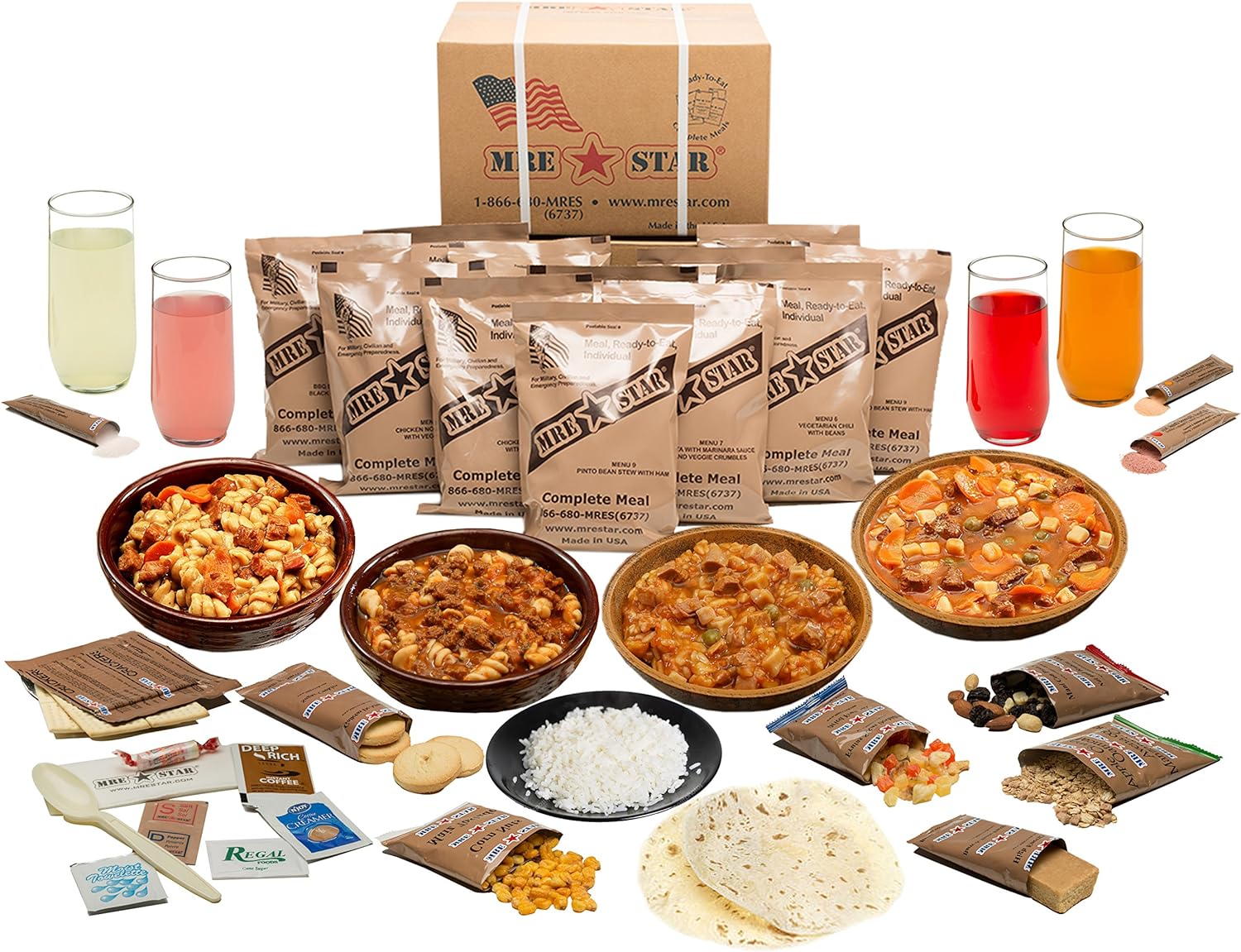
Shelf-stable options, such as emergency food buckets or ready-to-eat meals, can help bridge small gaps when prices spike or availability changes. This sort of preparation enables flexibility, not alarm.
Shipping and Distribution Delays
Shipping connects every part of the global economy. When that slows, effects reach consumers surprisingly fast.
In recent years, shipping delays have become more frequent because conflicts, risks, and operational strain accumulate across systems.
Port bottlenecks are a major problem. We just don’t feel it, that is. But honestly, the impact is really huge. Workforce disruptions lower capacity.
Routes are detoured around high-risk areas, adding travel time. Insurance costs for ships passing near hot zones go higher, adding cost and complexity.
And quite often, containers remain stuck in the wrong places, creating shortages even when the goods exist.
The problems travel far downstream quickly. Warehouses wait longer for their stock. Merchandisers are not getting their stock as planned. The seasonal arrivals come late.
That is, after the demand is already met. Businesses are facing higher transportation costs and wrestling with who will pay what.
Perhaps the effects of this disruption begin for consumers when the last-mile delivery occurs. It takes a long time for online purchases to actually arrive. Their tracking doesn’t move quickly enough.
Things that were once delivered in a matter of days now take weeks. Costs creep up, covering not only logistics but also the delivery process itself. Not dramatic, perhaps, but a shift nonetheless.
Let's take an example situation. Normally, people prefer to buy their festive-season gifts well before the season begins.
In the case of overseas orders, the items do not arrive on time due to port congestion and supplier delays in booking the ship.
When items arrive after the festive season ends, customers pay the same price and have fewer replacement options.
For businesses, this has several effects because inventory management processes are lengthened. The same goes for customer service expenses.
So, really, a shipping delay is not a single event. Rather, it is an “added” effect of pressure developing in a system.
Final Thoughts: What Americans Can Do
During wars that disrupt global supply chains, we don't need dramatic actions. We just need to make thoughtful decisions to reduce tension. And, what exactly, you ask?
Well, one useful step is to gain an understanding of the origins of the goods people use. Goods such as popular foods or fuels may follow long supply chains involving several countries.
By recognizing the global nature of chains like these, people can gain a clearer understanding of the reasons for price changes or delays.
Diversification is also important wherever possible. Companies are already conscious of this at a business level.
Householders might think of this as not relying on only one shop, brand, or delivery slot for certain goods. Useful flexibility at a time of sudden demand or unexpected unavailability.
Policy also plays a critical role in these investments. This is beyond us, ordinary citizens, but we hope they also take this into consideration. Investing in measures to build the resilience of the supply chain and upgrade local processing capabilities.
But then, again, preparedness does not have to be so dramatic. Basic emergency kits, budgeting room for price changes, and community awareness help households manage uncertainty.
Food is a good example. A small reserve of shelf-stable meals can give breathing room during temporary shortages, shipping delays, or sudden price spikes.
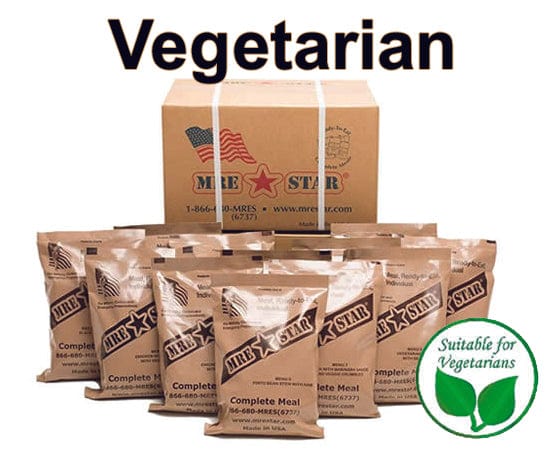
Some people opt for long-lasting options available for storage, such as organic emergency food buckets or ready-to-eat meals, which were originally developed for military and disaster response.
Products like ReadyWise Organic Emergency Food Supply or MRE-style meals are practical tools, not signals of fear. They are meant to cover short gaps, not replace everyday shopping.