
Power outages are becoming the norm, unlike in the past. Many areas are actually prone to experiencing power outages due to heat waves, storms, or high demands on the power grid. To the point where some areas even receive notifications about a "cut" in electricity supply.
These are known as rolling outages. They occur when stress is placed on the power grid. And, of course, the utility company must control demand.
The areas are switched off temporarily. After which, the power is restored. While this prevents a larger crisis, it also means homes could lose electricity with little notice.
In most households, a power outage will affect people immediately. The refrigerator will stop functioning. The internet and Wi-Fi will not work. Sounds pretty hassle, right?
People will not be able to recharge their phones and laptops. The air conditioning or the heater may shut down. A power outage can cause inconvenience, even for a short time. A longer outage causes stress.
This matters now because these situations are occurring more frequently. The power distribution infrastructure is aging.
And yes, even the effects of weather on these systems are more damaging. Not to mention the dangers to the power grid are now technical in nature.
As a result, a power outage lasting just an hour may now be something households need to expect occasionally. Think of it now like a norm.
But don't worry, preparing for these occasions can be relatively straightforward. Just follow through this post.
IN THIS ARTICLE, we will discuss what rolling outages are and their general usage and benefits for households.
What Are Rolling Outages—and Why Utilities Use Them

When the power goes out, not all outages are the same. People often use the term 'blackout' to mean anything. But honestly, there are a couple of differences that matter.
A blackout is what most people are familiar with. Power is unexpectedly cut off due to a breakdown. A storm knocks down a line, and equipment fails. Repairs happen after the fact. No warning most of the time.
A brownout is a little different. The power stays on, but the voltage drops. Lights may dim, and appliances may not function properly. This is usually done to reduce strain without actually shutting things off.
Rolling blackouts are planned in advance or triggered by evolving conditions. Utilities shut off the power in certain areas for a small window, then flip the switch back on.
The objective is control. These are not acts of accident. They are done to prevent something worse.
High Demand
These grid operators decide to curtail power when demand exceeds the system's safe capacity. This may happen during extreme heat or cold.
Everyone is running air conditioning and heating simultaneously. The grid has limits. When those limits are close, operators step in.
"Cascading Failures"
Another reason is to prevent cascading failures. If one part of the grid overloads and fails, then it can cause failures in other areas. That leads to longer outages and slower recovery. Rolling outages reduce that risk.
Residential Areas < Critical Services
Utilities also protect critical services. Hospitals and emergency response centers, as well as a water system, are prioritized. Power is first shifted away from residential areas.
More warnings are being issued now because the rules have changed and the conditions have shifted. Utilities are required to communicate risks earlier.
At the same time, grid stress is more common nationwide. Giving notice helps people prepare, even if the outage itself is still a nuisance.
The Aging U.S. Power Grid
Much of the electric infrastructure in the United States is old. Not a little old, very old. But it's pretty understandable.
Much of the transmission infrastructure (even the substations) dates back several decades. Some of the infrastructure is 40 to 70 years old and still functioning well.
However, it was designed for a different model. Not exactly "fit" for today.
Homes at that time consumed less electricity. There were limited electronics. There was no consistent internet usage.
There were no lines of screens, chargers, and smart devices working tirelessly. Air-conditioning was not prevalent. And of course, the patterns of winter and summer were predictable. Or more predictable than today.
Today, electricity consumption is nothing like it was back then. Demand only goes up every year. It neither stops nor slows down.
Electric cars are one area where electric vehicles play a significant role. Domestic charging contributes to the base load, primarily during evening peaks.
More people are turning to electric sources for space heating and cooking. Heat pumps, induction cooking, and electric commercial water heaters are all grid-dependent.
While efficient, they increase base demand. That's additional pressure on our electricity supply.
Then there are also data centers. The demand for cloud storage, streaming, artificial intelligence software, and cryptocurrency mining also consumes substantial electricity.
Many of these are also always on and always operational. They are critical components in today's world and also place stress on systems not designed for this level of usage.
But, at the same time, the upkeep is also not keeping up. Upgrading the infrastructure is a cost-intensive affair.
It involves permitting, a lengthy planning cycle, and inter-agency coordination. Unfortunately, politicization and regulatory bottlenecks further delay this progress.
Thus, it often becomes a matter of keeping the systems operational rather than upgrading them.
This creates one big issue. Repairs are often made after the break has happened. A transformer goes down during a heatwave.
A line goes down during a storm. You get the picture. It's really hard sometimes to keep it running.
Extreme Weather Is Now the Norm
• Heat Waves
Heatwaves are one of the biggest challenges. As temperatures rise, air conditioner use continues to increase.
Everybody starts consuming electricity simultaneously. The usage shoots up quickly. The transformers are operating overtime and overheating. This places significant pressure on the power supply.
If too many transformers are operated simultaneously, the network approaches its maximum capacity. Honestly, this is where rolling outages become relevant.
The power company reduces demand by scheduling short-term power outages in some areas. This is already happening in several areas during hot temperatures. Typically, between late afternoon and early evening.
• Winter Storms
Weather conditions also affect power delivery. In cold weather, a different set of issues occurs.
In the event of a snowstorm or cold wave, equipment may freeze or become brittle. Ice and snow accumulate in lines. Substations are also impacted in cold conditions. Heating demand also increases.
In some instances, the supply of natural gas might also be affected. This is because a power station that relies on gas may fail to secure sufficient supplies when it is most needed.
This will reduce electricity generation despite high demand. You can look up recent winter power failures. They largely tell the same story.
• Storms, wildfires, and flooding
There are storms as well. These pose another risk. There are fallen lines brought about by high winds.
There are flood-related and underground facility damage. These extend repair work due to flooding and inaccessibility.
Wildfires have also affected utility companies' operations. In wildfire-prone regions, electricity is sometimes cut off to reduce the risk of fire outbreaks.
It's a real thing, actually. So if you're in these zones, it's important to take note.
This can be for hours or days. This impacts the restoration time. When infrastructure is simultaneously affected by weather, restoration takes longer.
Restoring power will take longer. So, you really have to make do with what you can, right?
Who Is Most at Risk During Rolling Outages

• Urban vs. rural households
Not everyone experiences the same rolling outages. Some regions are affected more by the rolling outages.
In urban settings, many houses receive power supply from various power lines. In addition, there are power plants nearby.
As a result, the outage period may be short. Rural regions may receive power supply from one or two power transmission lines.
• Families with medical devices
Families with healthcare devices are particularly at risk. Devices such as oxygen pumps and healthcare monitors must be powered continuously.
Even a brief power outage could be dangerous. It's not just a matter of having the means of backup. It could be a matter of life and death.
• Remote workers and home-based businesses
Telecommuters and home businesses are also affected. When the electricity goes offline, laptops, internet routers, and lights will no longer work.
Some data centers may have backup systems. But honestly, if this affects the home, work, and communications will cease.
• Renters vs. homeowners
Those who rent versus those who own will experience it differently as well. Owners may have generators or alternative energy sources, such as solar.
Those who rent will be entirely dependent on the power company. If the landlord is not prepared or does not use energy-efficient appliances, renters will be left in the dark.
Leaning too heavily on utilities or landlords is not a good choice. Power availability is not guaranteed.
Extreme weather, high power demand, or cyberattacks may result in rolling blackouts. Unexpected power failures could occur at any time.
When this happens, it is helpful to have a plan, stock up on non-perishable food items, a first-aid kit, and an alternative power source.
How Households Can Prepare for Rolling Outages
• Energy awareness and load reduction
The more rollouts, the better to be prepared. The best way to prepare is to be aware of how your household consumes electricity.
Rate what is important to you and what is just a luxury. Important things to keep include lighting, your refrigerator, health-related equipment, and Wi-Fi connectivity.
Other things are additional lighting, entertainment devices, or appliances. Or anything really that you can do without. When power usage is high, smart power use can make a significant difference.
Switching off unnecessary appliances or using energy-efficient ones will help decrease the overall power usage. It will support the power grid and improve overall system stability in your area.
• Emergency power basics
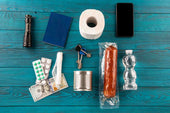
For a short disruption, basic emergency products may provide some aid. These include flashlights, batteries, and power banks, which ensure certain gadgets work.
A first-aid kit and non-perishable items will also work well. However, such products may not perform well during prolonged disruptions. Especially if there is an issue with electricity in your zone. So, better check that first.
• Backup power options compared
Power options in the backup system offer more flexibility. Gas generators are more powerful. However, they are noisy, require fuel, and must be operated outdoors. So, there's that.
Batteries are relatively quiet and safer to operate indoors. They store power that can support important appliances. But, they cannot support the entire house if the power demand is high.
Another option is portable solar energy generators. They store energy in batteries and can be charged with solar energy.
They pose no health risks when used indoors, require no fuel, and can provide frequent power during an outage. They won’t be used to supply overall power through the grid, though.
Why Portable Solar Power Generators Are Ideal for Rolling Outages
Portable solar power generators are essentially like batteries that you can charge with sunlight. Well, more or less. They store electricity after all. And then, they let you use it when the power trips offline.
Unlike gas generators, they do not burn fuel. And also, they don’t produce fumes. That makes them safe for indoor use and much easier to handle. That’s what makes it perfect.
These generators offer several advantages over traditional backup options.
First, they are quiet. You won’t have to deal with loud noise while running them. That’s a great plus.
Second, they don’t rely on fuel. So, what then? Well, then there’s no risk of running out during a heat wave or extreme weather event.
Third, they require minimal maintenance. You probably know how some generators require regular checks on engines or fuel lines. But with this, solar generators mostly just need to be kept charged. That really makes it so efficient.
They are a perfect fit for rolling outages. Short to medium-duration blackouts are common. Especially when electricity demand spikes or the power grid is under stress.
With a portable solar generator, you can keep essential devices running. Think of lights, medical equipment, and Wi Fi routers.
And that’s not all, you can even run energy-efficient appliances in some cases. You can also use them repeatedly over several days.
Really, as long as there is sunlight, the system can recharge itself. This is why it’s very useful if the power stays off longer than expected.
What to Look for in a Portable Solar Power Generator
A. Capacity and output
The first is watt-hours, and the second is watts for a solar power generator. This indicates how many watts the battery can deliver at a given time or store at a given time.
B. Portability and ease of use
One of the strengths of such generators is that you can move the equipment from one location to another if your house experiences rotating outages. Very portable.
Of course, there are lighter and heavier models depending on the equipment that you will choose to purchase.
Solar compatibility and recharge speed
The compatibility and recharge rate when using solar also matter. The generator should recharge fast when solar panels are available.
Or maybe connect to the grid when electricity is present. This enhances its ability to withstand power outages and meet electricity demand.
Durability and expandability
Some models support adding extra batteries to extend backup power. There are models designed to operate daily, perform well offline, and continue to function during heat waves and storms.
For those looking for a simple start to their preparations, a collection of preparedness solutions, such as the Prepared Bee Portable Solar Power Generators, is highly appreciated.

It offers models suitable for their needs, whether for essential services during a blackout or for multiple appliances over the long term.
Household’s energy needs
Maybe your household uses electric stoves, air conditioners, or other power-hungry appliances. Ensure your generator has sufficient capacity to meet these needs.
Portable generators may be suitable for your household’s needs, particularly for lighting, communication, and medical equipment.
But do know that larger power outages may require a larger generator. That's something to consider.
Knowing what to look out for will also enable your household to respond quickly. In cases where electricity may be limited, the right generator will keep essential services operational.
This will also shield everyday life from the effects of rolling blackouts at home.