A grocery shelf can look normal even while costs, shipping routes, payments, and replacement inventory are already under strain. That is why sanctions-related shortages can seem to appear suddenly: the disruption begins upstream, while households see it only after existing stock is used up.
Sanctions do not automatically empty stores, and not every price increase is caused by sanctions. Weather, war, labor disputes, export bans, cyberattacks, transportation failures, and ordinary demand shifts can produce similar effects. The practical lesson is not to panic at every headline. It is to understand how a distant policy change can move through an interconnected supply chain and eventually reach an ordinary household.
What Economic Sanctions Actually Do
Economic sanctions are government restrictions intended to influence the behavior of another government, organization, industry, company, or individual. They are not all alike. The U.S. Treasury’s Office of Foreign Assets Control explains that sanctions can be comprehensive or selective and may involve asset blocking or trade restrictions.
Depending on the program, sanctions may:
- freeze property or financial assets connected to designated parties;
- prohibit transactions with named people, companies, banks, or government bodies;
- restrict investment, financing, or access to certain financial services;
- limit imports or exports in particular sectors;
- restrict access to technology, software, machinery, or components; or
- require licenses before a transaction or shipment can proceed.
This distinction matters because food and medicine may not be directly prohibited, yet delivery can still become harder. A bank may decline a permitted payment because its compliance cost is too high. A shipper or insurer may avoid the route. A supplier may worry about accidentally dealing with a blocked intermediary. Economists and humanitarian groups sometimes call this over-compliance or de-risking: private companies act more cautiously than the law strictly requires.

How Sanctions Turn Into Shortages
The visible shortage is usually the last step in a longer chain. A restriction introduced today may take days, weeks, or months to reach a consumer because wholesalers and retailers still have inventory in transit or on hand.
1. Payments become slower or harder
International trade depends on banks, currencies, credit, and documentation. If a bank, company, or government body is blocked—or if financial institutions cannot confidently determine whether a transaction is permitted—payments may be delayed or refused. A legal order becomes commercially useless if the buyer cannot pay the supplier or the supplier cannot receive funds.
2. Shipping and insurance costs rise
Cargo needs vessels, ports, freight forwarders, insurers, and sometimes multiple transshipment points. When routes or counterparties become risky, carriers may add surcharges, require more documentation, use longer routes, or withdraw service. The product may still be available, but it becomes slower and more expensive to move.
3. Manufacturers lose critical inputs
A finished product can depend on a small imported part, specialized chemical, piece of software, or machine tool. A company may have nearly everything needed to operate and still stop production because one irreplaceable input is missing. This is why the most important shortage is not always the item directly named in a sanction.
4. Buyers compete for substitute supply
When one source disappears, every affected buyer looks elsewhere. Alternative suppliers raise production only gradually, and their transport capacity may already be committed. Prices rise as multiple countries and companies bid for the same replacement fuel, fertilizer, grain, component, or shipping slot.
5. Expectations change behavior
Households and businesses do not wait passively for shelves to empty. If buyers expect scarcity or higher prices, they order earlier and purchase more. That understandable behavior can turn a modest supply reduction into a temporary retail shortage. Social-media rumors can accelerate the run even when the original disruption is narrow.
Why Modern Supply Chains Can Change So Quickly
Modern supply chains are efficient because companies minimize idle factories, excess inventory, and unnecessary storage. That usually lowers prices. The trade-off is less slack when a route, supplier, payment channel, or key commodity becomes unavailable.
Inventory also hides stress. A store may look fully stocked while its next shipment has already been canceled. A pharmacy may fill today’s prescription while the wholesaler has placed the drug on allocation. A manufacturer may ship completed units while knowing that a missing component will stop next month’s production.
Global commodity markets spread the effect beyond the sanctioned country. Energy, grain, fertilizer, industrial metals, and shipping capacity are traded across borders. When supply is removed or rerouted, buyers elsewhere pay more even if their country is not directly involved. The World Bank’s commodity-market work shows how war, trade disruption, energy shocks, and fertilizer costs can move together through the global economy.
| Stage | What businesses see | What households may notice |
|---|---|---|
|
Immediate Hours to days |
Compliance reviews, payment holds, canceled bookings, volatile commodity prices | News headlines and rapid fuel or market-price movements; usually little physical scarcity yet |
|
Early Days to weeks |
Rerouted freight, longer lead times, supplier substitutions, precautionary orders | Promotions disappear, delivery estimates lengthen, certain brands or sizes become unavailable |
|
Visible Weeks to months |
Higher input costs, production cuts, inventory allocation, contract renegotiation | Higher prices, purchase limits, fewer choices, intermittent shortages |
|
Adjustment Months to years |
New suppliers, redesigned products, domestic capacity, permanent trade rerouting | Availability improves, but prices and product selection may settle at a new normal |
What Products Are Most Likely to Be Affected?
The greatest risk exists where supply is concentrated, substitutes are limited, transportation is specialized, or production takes a long time to expand.
Energy and transportation
Oil, natural gas, refined fuels, and electricity inputs affect more than the monthly utility bill. Higher energy costs raise the cost of farming, manufacturing, refrigeration, and transportation. Even goods produced domestically may become more expensive because they must be processed and delivered.
Food and fertilizer
A sanction or conflict does not need to block finished food to affect groceries. Farmers rely on fuel, fertilizer, animal feed, machinery, packaging, and credit. A fertilizer shock may not reach the supermarket immediately; it can appear later through lower output or higher production costs.
Medicines and medical supplies
Medicines often involve active ingredients, packaging, quality testing, specialized factories, and distribution across several countries. Sanctions programs may contain humanitarian authorizations, but finance, shipping, documentation, and supplier concentration can still complicate delivery. Never hoard prescriptions or change treatment on your own. Refill on schedule and discuss continuity concerns with your pharmacist, prescriber, or insurer.
Electronics, machinery, and replacement parts
Export controls frequently focus on technology and industrial capability. A missing chip, sensor, bearing, battery material, or software license can delay vehicles, appliances, farm equipment, communications gear, or factory maintenance. Repair times may lengthen before new-product shelves look empty.
Everyday imported goods
Low-cost household goods may depend on long supply chains and thin margins. When freight, insurance, currency, or compliance costs rise, retailers may reduce variety and stop carrying slow-selling sizes, flavors, or brands. Consumers often experience a shortage first as less choice, not total absence.

Real-World Lessons Without Oversimplifying
Sanctions rarely operate alone. The commodity shock surrounding Russia’s invasion of Ukraine combined war damage, disrupted Black Sea trade, uncertainty, company withdrawals, export restrictions, sanctions, and changes in energy purchasing. It would be inaccurate to attribute every food or fuel increase to one policy. The useful lesson is that several shocks can reinforce one another.
Iran provides a different lesson. Long-running restrictions on finance, oil, trade, and designated entities have interacted with domestic economic policy, currency depreciation, political risk, and private-sector over-compliance. Humanitarian goods may be authorized, yet legitimate transactions can remain difficult when banks, carriers, and suppliers are unwilling to accept the operational risk.
These examples show why sanctions should not be described as an instant switch that turns trade off. They change incentives and access. Markets then adapt—sometimes through new suppliers and routes, sometimes through higher prices and lower quality, and sometimes through informal or illicit channels. The burden is unevenly distributed among governments, businesses, and ordinary households.
Early Warning Signs That Matter
A single headline is not a reason to rush to the store. Look for several confirmed signals moving in the same direction:
- Official sanctions or export-control announcements affecting a major supplier
- Repeated shipping delays on the same route or category
- Manufacturers warning about a specific missing input
- Wholesale prices rising before retail prices follow
- Retail purchase limits or distributor allocations
- Multiple trusted sources confirming the same supply problem
- Local businesses substituting sizes, brands, or ingredients
- Longer repair, refill, or special-order lead times
A Practical Household Response
Preparedness should reduce competition during a shortage, not make it worse. Build a modest buffer during normal conditions, rotate what you store, and replace items gradually.
- List essential dependencies. Include food, water, medication, infant or elder-care items, pet supplies, transportation, power, and household consumables.
- Identify the fragile items. Highlight anything imported, specialized, prescription-only, single-source, or difficult to substitute.
- Set a realistic time buffer. Begin with several days, then work toward a household-appropriate reserve. Use our guide to estimating emergency-food quantities instead of copying a one-size-fits-all number.
- Buy slowly and rotate. Add one or two extras during ordinary shopping. Put newer goods behind older goods and track expiration or best-quality dates.
- Diversify solutions. Do not depend on one store, payment method, fuel source, food format, or communication channel.
- Keep a modest cash option. A regional disruption can affect card processing or ATM access. Store only an amount appropriate to your budget and home security.
- Review quarterly. Use, donate, or replace aging supplies; test equipment; update medication and dietary needs; and remove products your household will not actually use.
For a deeper look at supplier concentration, alternative purchasing channels, household inventory, and substitution planning, see the Supply-Chain Disruption Preparation Guide.
Build a Food Buffer That Works Without Normal Utilities
A practical food reserve should contain familiar grocery items your family already eats. Include foods that require little cooking, not only dry staples that depend on water and fuel. Balance calories with protein, fats, carbohydrates, dietary restrictions, and the needs of children, older adults, and anyone with a medical condition.
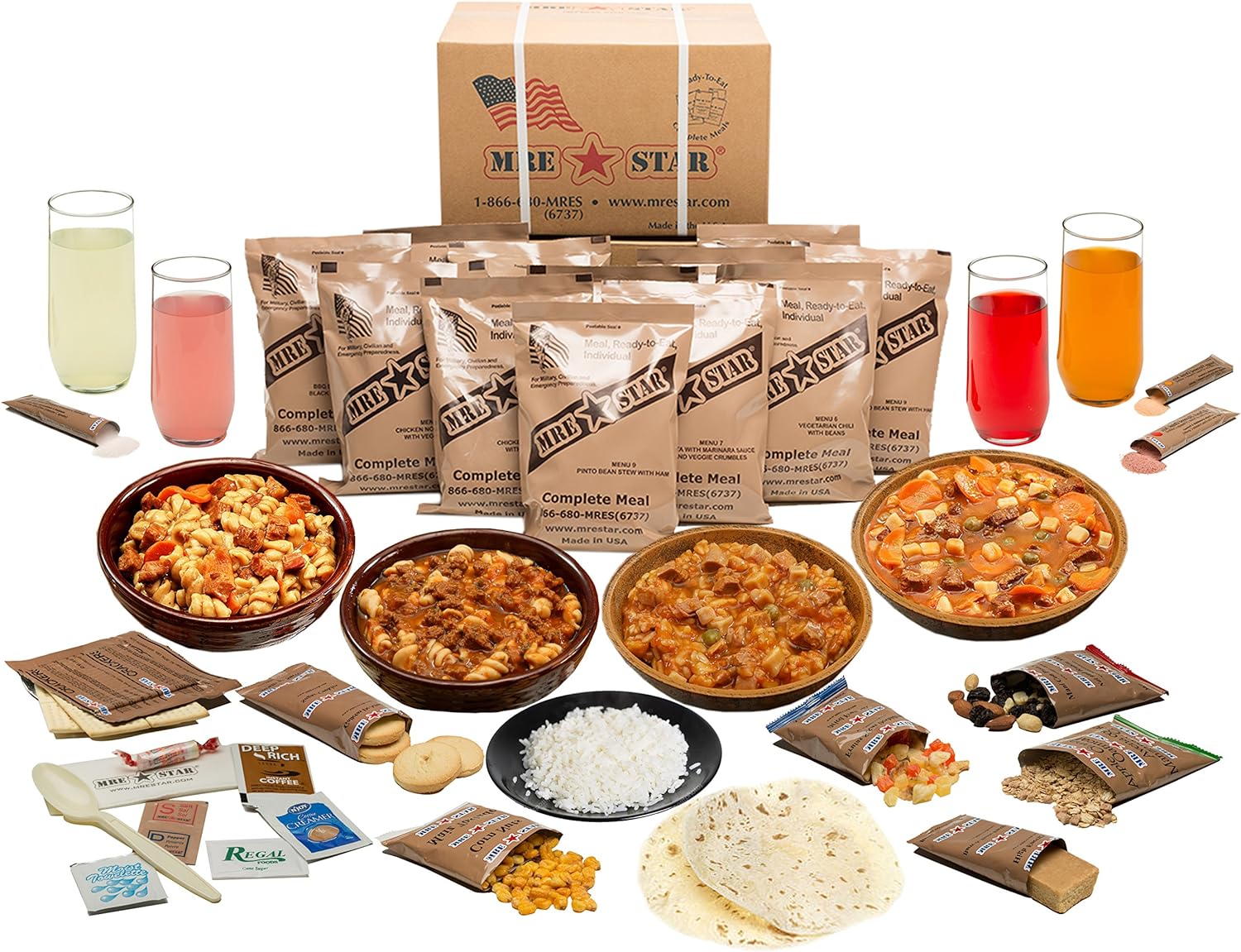
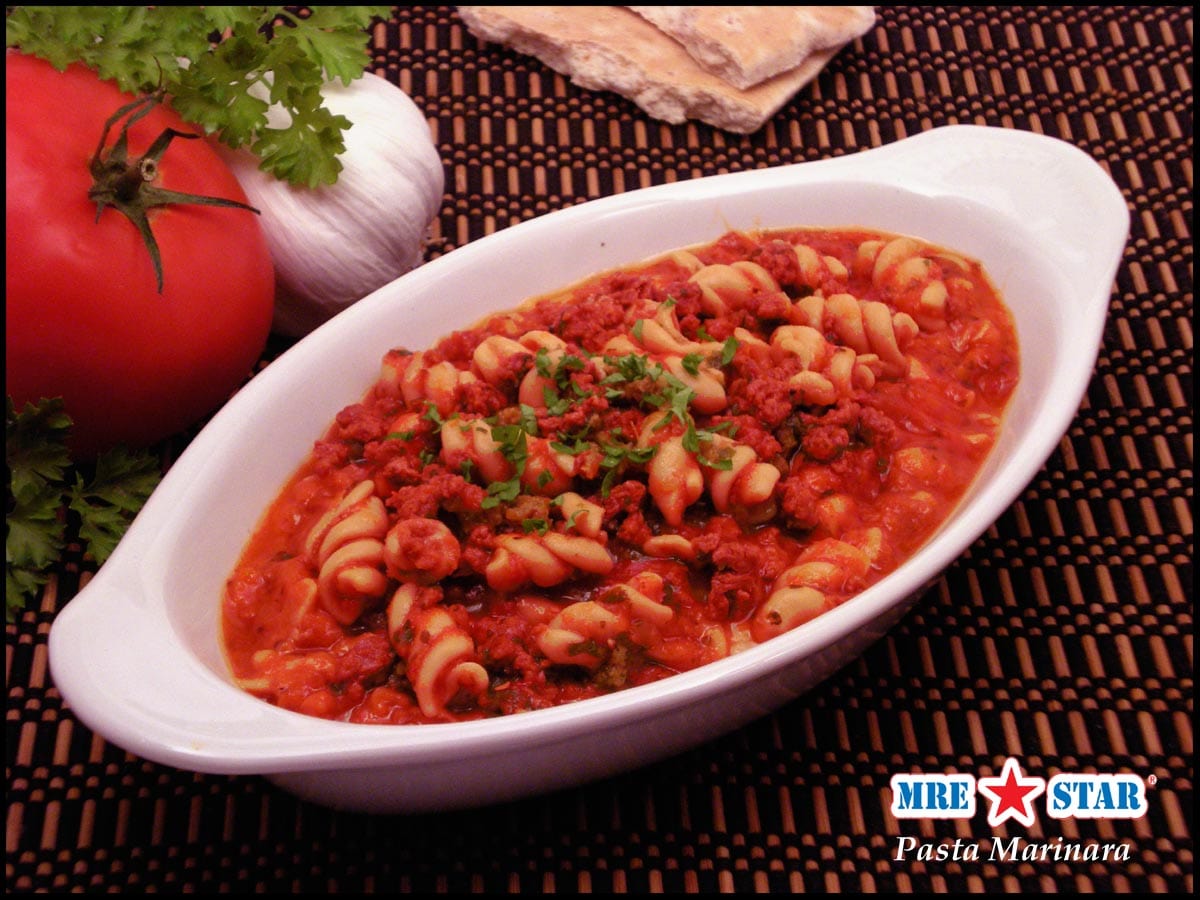
MREs can fill a specific gap within that plan: complete, individually packaged meals that are fully cooked and do not require refrigeration before opening. They are heavier and generally have a shorter storage horizon than many freeze-dried foods, so they should be one component of a varied pantry rather than the entire plan.
Before buying any emergency food, review ingredients and allergens, confirm the number of complete meals rather than entrée pouches, and understand the manufacturer’s storage guidance. Heat shortens the usable life of shelf-stable food, so a hot garage, attic, shed, or vehicle is usually a poor long-term storage location.
Use the Emergency Food Guide to compare pantry staples, ready-to-eat meals, and freeze-dried options. For MRE-specific questions about contents, heating, storage, and civilian versus military rations, see the Complete Guide to MREs.
What Not to Do During a Shortage Scare
- Do not clear shelves. Sudden excess demand worsens the disruption and leaves vulnerable neighbors without essentials.
- Do not buy food your household will not eat. An expensive stockpile is not resilience if it expires unused.
- Do not hoard medication. Follow refill rules and coordinate with healthcare professionals.
- Do not trust viral photographs without context. An empty aisle may reflect a local delivery problem rather than a national shortage.
- Do not put all savings into goods. Shortages often appear as higher prices rather than total unavailability, so financial flexibility matters.
- Do not confuse preparedness with prediction. A versatile household buffer is more useful than betting everything on one geopolitical scenario.
Frequently Asked Questions
Do sanctions always cause shortages?
No. The effect depends on what is restricted, how important the affected supplier is, available substitutes, inventories, enforcement, private-company behavior, and other economic conditions. Some sanctions mainly affect designated assets or financing and produce little visible consumer impact.
Are food and medicine exempt from sanctions?
It depends on the specific program. Humanitarian transactions may be exempt or authorized through general or specific licenses, but the scope and conditions vary. Even permitted trade can encounter payment, shipping, insurance, and compliance barriers.
Why do prices rise even when products are still available?
Businesses may face higher costs for energy, replacement suppliers, freight, insurance, credit, currency conversion, and compliance. Those costs can reach consumers before physical inventory runs out.
How much food should a household store?
Start with several days of food and water that meet your household’s actual needs, then expand gradually according to local hazards, budget, dietary requirements, storage space, and cooking options. Rotate stored food through normal meals.
Are MREs better than freeze-dried food?
They solve different problems. MREs are fully cooked and can be eaten without rehydrating the entrée, making them convenient when utilities are unavailable. Freeze-dried food is typically lighter and may offer a longer storage period, but usually needs water and benefits from a heating method. Many households use both.
Final Takeaway
Sanctions create shortages indirectly as well as directly. A blocked company, restricted technology, difficult payment, unavailable insurer, or longer shipping route can remove one link from a supply chain. Existing inventory delays the visible effect—then households encounter higher prices, reduced choice, longer wait times, or empty shelves.
The sensible response is not panic buying. It is a maintained buffer of food, water, medication planning, essential household supplies, payment options, and realistic substitutes. Prepared during normal conditions, that cushion gives your family time to make calm decisions when “normal life” changes faster than expected.